
Rhinoplasty in Gangnam
Key takeaways
- Primary rhinoplasty in Gangnam runs ₩4,500,000–₩7,500,000 ($3,400–$5,600) for silicone-based augmentation with tip work, ₩6,000,000–₩10,000,000 ($4,500–$7,500) when autologous cartilage (septal or ear) is used for the tip, and ₩8,000,000–₩14,000,000 ($6,000–$10,500) for full rib-cartilage rhinoplasty. Revision adds 30–60% over primary depending on prior-work complexity.
- Implant material choice is the central technique decision. Silicone is the historical Korean default (lower cost, predictable shape, but capsular contracture and migration risks over years); Goretex/PTFE has lower contracture but higher infection risk; autologous cartilage (rib, septal, ear) is the modern revision standard and increasingly used for primary cases at the dedicated revision-focused clinics.
- Plan a minimum 10-day trip for primary rhinoplasty (5–7 day splint, dressing change before flying); 14 days is more comfortable. Revision cases need 14–21 days because recovery is more variable. Bruising under the eyes is the most disruptive visible recovery and resolves over 10–14 days.
- Korea's revision-rhinoplasty volume advantage is genuinely meaningful. If your case is revision rather than primary, the value proposition for traveling is stronger than for any other K-beauty category — autologous cartilage rebuilding done well requires per-surgeon volume that few non-Korean practices match.
What surprises most people
- Korean rhinoplasty is predominantly augmentation, not reduction. The patient demographic is mostly Asian noses with low bridges and softer tips that benefit from added height and projection. The surgical menu reflects that: dorsal implants, tip cartilage grafts, columellar struts. Patients arriving from Western markets expecting reduction work (hump removal, dorsal narrowing) will find it offered, but the per-surgeon volume on those indications is meaningfully lower than for augmentation cases.
- The implant material question is the central technique decision and the most-debated topic in Korean rhinoplasty. Silicone is the historical default (predictable, low cost, but 5–10% capsular contracture rate over 10 years and a long-term migration risk). Goretex (PTFE) has lower contracture rates but higher infection risk and more difficult revision if removal is needed. Autologous cartilage (rib, septum, ear) is the modern standard for revision and increasingly chosen for primary cases at the dedicated revision-focused clinics; it integrates with the body's tissue, has the lowest long-term complication profile, but adds OR time and a donor-site scar.
- Korea is the international destination for revision rhinoplasty specifically. Patients who had primary work elsewhere with unsatisfactory results (persistent asymmetry, implant migration, over-resected tip, alar retraction, capsular contracture) make up a meaningful share of the Gangnam revision-rhinoplasty case mix. The technique that matters most here is autologous rib-cartilage rebuilding, done at scales few non-Korean practices match.
- Tip surgery is where most outcomes are won or lost. Dorsal implant placement is technically straightforward; tip refinement requires more nuanced cartilage work and is the variable that explains why two surgeons using identical materials produce visibly different results. The senior Gangnam tip-rhinoplasty specialists work almost exclusively with cartilage suturing techniques rather than implant-based tip projection.
- The under-eye bruising is the recovery surprise patients underestimate. Rhinoplasty bruises spread downward through the soft tissue around the eyes, producing dramatic-looking shiners that peak at days 3–5 and fade over 10–14 days. The visible bruising matters more than the splint for the social-recovery calculation; concealer-friendly resumption of normal activities is closer to day 10 than day 7.
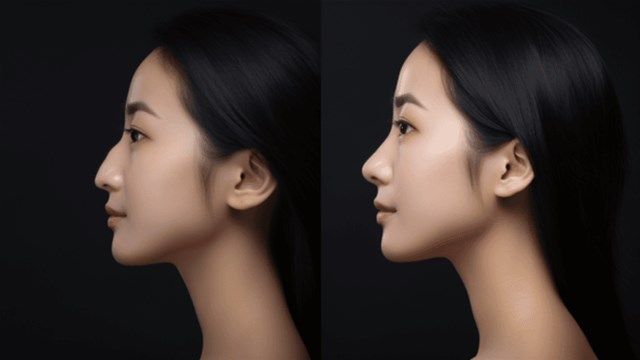
Rhinoplasty is the K-beauty surgical category with the highest absolute volume globally and the one where Korean technique conventions diverge most clearly from Western practice. The headline difference: Korean rhinoplasty is predominantly augmentation rather than reduction. The dominant patient request is a higher bridge and a more refined, projected tip, addressed with implant material on the dorsum and cartilage grafts at the tip. Western rhinoplasty more often reduces dorsal hump, narrows the bridge, and refines the existing tip. The same procedure name, two different default plans.
That divergence has implications for who Korea is the right destination for. Patients seeking augmentation rhinoplasty (a higher bridge, a more refined Asian-style tip, a corrected short or saddle nose) are exactly the case mix Gangnam clinics handle at the highest volumes; senior surgeons at the dedicated rhinoplasty practices report performing thousands of cases across their careers. Patients seeking reductive rhinoplasty (hump removal, dorsal narrowing, tip refinement on a Caucasian-shaped nose) are also handled competently here but represent a smaller share of the case mix; the per-surgeon volume advantage is less pronounced for these indications than for augmentation work.
Korea has also become the international destination for revision rhinoplasty. Patients who had primary work elsewhere and arrived at unsatisfactory outcomes — implant migration, persistent dorsal asymmetry, over-resected tip cartilage, alar retraction, capsular contracture — fly to Gangnam revision specialists who see this case mix at higher volumes than most international markets. The technique innovation that matters most in this segment is autologous cartilage grafting (rib, septum, ear), which Korean revision surgeons use extensively to rebuild structure that prior surgery removed.
This guide covers what rhinoplasty actually does in the Korean clinical context, the implant materials and cartilage-graft choices that define the technique decision, what each scope of procedure realistically costs in Gangnam, recovery at week 2 / month 2 / month 12, and the questions that separate a thoughtful rhinoplasty consultation from a careless one. Non-surgical nose filler is referenced under alternatives. Septal-only work for breathing rather than cosmetic concerns belongs with an ENT rather than a cosmetic plastic surgeon and isn't covered here.
What rhinoplasty is (and is not)
Rhinoplasty is the surgical reshaping of the external nose, the internal supporting structures, or both. The procedure modifies the bony pyramid (the upper third of the nose), the cartilaginous middle and lower third, the septum, and the soft-tissue envelope through coordinated cuts, repositioning, grafts, and (in augmentation) implants. The most common indications in Korean practice are dorsal augmentation (raising a low bridge), tip refinement (projecting and narrowing a bulbous tip), short-nose lengthening (correcting an upturned or shortened nasal length), alar reduction (narrowing wide nostrils), and revision (correcting prior surgery).
Open and closed approaches are both used in Korea. Open rhinoplasty uses a small transcolumellar incision (across the strip of skin between the nostrils) plus intranasal incisions, giving the surgeon direct visualization of the underlying cartilage and bone; the small external scar generally fades over 6–12 months. Closed rhinoplasty uses only intranasal incisions with no external scar, but limits the surgeon's view; it works well for simpler cases and dorsal-only work but is less suited to complex tip surgery or revision. Korean preference splits roughly along case complexity: closed for simple primary cases, open for complex primary or revision.
Rhinoplasty is not the same as septoplasty, which corrects a deviated septum for breathing (functional indication) without changing external appearance. The procedures can be combined (septorhinoplasty) when both indications exist; pure-cosmetic rhinoplasty without functional issues doesn't include septoplasty.
It is also not the same as nose filler, which can add volume to the dorsum or tip non-surgically for 12–18 months at a time. Filler can correct minor depressions or asymmetry but cannot reduce, narrow, or lengthen — and carries vascular-occlusion risks at the nasal dorsum that make it the highest-stakes filler zone. Patients sometimes try filler first, find it doesn't address what they actually want changed, and convert to surgery; that's a reasonable pathway when the consultation imaging supports it.
What patients actually report
Our reviews database holds 103 rhinoplasty entries (87 primary plus 16 revision-specific), the highest-volume tied entries of any procedure in the directory. The corpus is dominated by review metadata (URL, date, source, clinic) with substantive AI-summarized content on a smaller subset; the patterns below are aggregated from the summaries we have plus international forum data (RealSelf rhinoplasty, Reddit r/PlasticSurgery, Soompi K-beauty threads).
Multi-procedure trips are common in the Gangnam rhinoplasty patient mix. Of the reviews with substantive content, two patterns recur: rhinoplasty paired with facial contouring or jaw surgery (combined V-line plans), and revision rhinoplasty paired with facial-region revision in the same trip. The Gangnam clinics that handle high rhinoplasty volume are typically equipped for these combined cases.
Consultation depth matters more than for soft-tissue procedures. Reviewers who described detailed pre-op consultations — discussion of facial balance, realistic outcomes, and structured aftercare — generally reported higher satisfaction at 6 and 12 months. Reviewers who described quick consultations followed by surgical scheduling were the most likely to express dissatisfaction in the first month, even when their eventual outcomes were good.
The 6-month vs 12-month distinction is real and dramatic. Rhinoplasty tip refinement settles slowly. Reviewers consistently note that 6-month photos show residual swelling that masks the final shape; 12-month photos are what matter for revision conversations. Korean surgeons typically advise waiting until 12 months for revision decisions to allow complete tissue remodeling.
Sensory changes and stiffness are part of the recovery. Numbness or altered sensation at the nasal tip is common in the first months and generally resolves over 6–12 months. Reviewers who set this expectation explicitly report less anxiety; reviewers who weren't told express more concern even when sensation eventually returns.
The filtered rhinoplasty reviews show all 103 entries with original-language sources where available.
Cautions from clinical practice
Rhinoplasty in trained hands has a well-characterized complication profile. Most cases proceed without serious incident; the events that do occur tend to be longer-tail and material-dependent.
Implant infection and exposure. Silicone implants in the nose carry a small but persistent infection risk — reported rates are 1–4% in published series, with higher rates in revision cases or patients with prior nasal trauma. Infection generally requires implant removal, antibiotic course, and a delayed re-operation 6 months later (the so-called "two-stage" revision). Goretex implants have similar or slightly higher infection rates with more difficult removal due to soft-tissue ingrowth.
Capsular contracture and implant migration (silicone-specific). Over 10 years post-op, silicone implants accumulate a capsule of scar tissue around them; in 5–10% of cases this contracts and visibly distorts the nasal shape, requiring revision. Implants can also migrate downward over years, particularly when the original fixation was inadequate. These are the strongest argument for autologous cartilage in patients planning long-term outcomes — though autologous options carry their own tradeoffs (rib cartilage shows a 2–5% warping rate over years, plus donor-site morbidity at the chest harvest).
Tip skin necrosis. Aggressive tip work in patients with thin nasal skin (more common in older patients or revision cases) can compromise the blood supply to the tip. Reported rates are under 1% but the consequence (permanent tip-skin loss requiring reconstruction) is severe enough that surgeons handle thin-skinned cases conservatively.
Alar retraction. Over-resection of the lower lateral cartilages during tip refinement can cause the nostril rim to retract upward over months, exposing more of the nostril than was originally visible. This is one of the most-common revision indications globally and a meaningful share of the Gangnam revision-rhinoplasty case mix. Surgeons who preserve more cartilage at primary surgery have lower alar retraction rates at 2-year follow-up.
Septal perforation. Manipulation of the septum during cosmetic rhinoplasty can rarely produce a perforation between the nasal cavities. Reported rates are under 1% in primary cases and 3–5% in revision cases. Small perforations are often asymptomatic; larger ones produce whistling, crusting, or breathing changes and may require repair.
Asymmetric healing and persistent dorsal irregularities. Rhinoplasty is a more variable healing procedure than soft-tissue surgery; minor asymmetries or visible irregularities at 12 months are reported in 5–10% of primary cases. Most resolve with time or are accepted by the patient; the subset that proceeds to revision is in the 1–3% range.
Methods, materials, and Korean technique conventions
The implant material decision is the central technical question in Korean rhinoplasty. The major options:
| Material | Pros | Cons | Best for |
|---|---|---|---|
| Silicone | Predictable shape; low cost; easy to revise; widely used in Korea for decades | Capsular contracture 5–10% over 10 years; long-term migration risk; persistent foreign-body sensation in some patients | Primary cases with thick skin; cost-sensitive patients; predictable simple-augmentation work |
| Goretex (ePTFE) | Lower contracture rate; integrates partially with surrounding tissue; softer feel | Higher infection rate; more difficult to remove if revision needed; higher cost | Patients prioritizing softer texture; revision cases where silicone contracture was the primary issue |
| Autologous septal cartilage | No foreign body; integrates fully; minimal infection risk; donor site internal (no scar) | Limited supply (especially in revision cases where septum was used previously); not enough for major augmentation alone | Tip refinement and small dorsal grafting; preferred when supply is adequate |
| Autologous ear cartilage | No foreign body; reasonable supply; ear donor scar is hidden behind the ear | Donor-site recovery (1–2 weeks ear tenderness); cartilage can be more curved than septal; less rigid for major dorsal augmentation | Tip work and minor dorsal grafting; common in primary cases |
| Autologous rib cartilage | Largest supply; rigid enough for major dorsal augmentation; gold standard for revision and complex primary | Donor-site chest scar (3–4 cm); 1–2 weeks chest tenderness; longer OR time; rib warping risk over years | Major augmentation, revision rhinoplasty, short-nose lengthening, salvage of complex cases |
| Medpor (porous polyethylene) | Stable shape; tissue ingrowth | Very difficult removal; high revision-complication rate; rare in current Korean practice | Largely replaced by autologous cartilage in modern Korean practice |
Tip surgery uses cartilage suturing techniques almost exclusively in Korean practice; tip implants are largely abandoned because of long-term migration and skin-thinning risks. The standard tip techniques are the columellar strut, the tip onlay graft, and the extended septal extension graft — each addressing a different aspect of tip projection, length, and definition.
The per-zone map (nose subregions)
Rhinoplasty addresses different anatomic zones with different techniques. Most patients have concerns spanning more than one zone; the surgical plan is calibrated to the specific combination.
| Zone | Common indication | Typical technique |
|---|---|---|
| Bony pyramid (upper third) | Hump (Western), low bridge (Asian), wide nasal bones | Osteotomies for narrowing or hump reduction; dorsal implant or graft for augmentation |
| Cartilaginous middle vault | Dorsal asymmetry, internal valve collapse | Spreader grafts; dorsal implant for augmentation |
| Tip (lower third) | Bulbous tip, under-projected tip, drooping tip, asymmetric tip | Cartilage suture techniques; columellar strut; tip onlay graft; extended septal extension graft for lengthening |
| Alar (nostrils) | Wide alar base, flared nostrils | Alar base reduction (Weir excision); typical Korean modification narrows from inside the nostril |
| Columella (skin between nostrils) | Hanging columella, retracted columella | Caudal septum trimming or extension; columellar strut |
| Septum (internal) | Deviation, perforation, supply for grafting | Septoplasty (functional) or septal cartilage harvest (cosmetic) |
Most international primary cases involve the bony pyramid (augmentation or reduction), the tip (refinement or projection), and the alar base (narrowing). Revision cases often add the columella and septum to the work list. Combined zone plans are the norm rather than the exception; the consultation should produce a written plan that lists each zone and the planned correction.
Cost in Gangnam
Rhinoplasty pricing varies more than other K-beauty surgical procedures because the material choice and case complexity have larger effects on cost than for procedures with more standardized technique.
| Scope | KRW range | USD range | Note |
|---|---|---|---|
| Primary silicone augmentation + tip work | ₩4,500,000 – ₩7,500,000 | $3,400 – $5,600 | Includes 1 night hospital, anesthesia, implant, post-op meds |
| Primary with autologous cartilage (septal or ear) for tip | ₩6,000,000 – ₩10,000,000 | $4,500 – $7,500 | Adds OR time and donor-site work for cartilage harvest |
| Primary with rib cartilage (full autologous) | ₩8,000,000 – ₩14,000,000 | $6,000 – $10,500 | For major augmentation, short-nose lengthening, or patients who prefer no foreign body |
| Revision rhinoplasty (most cases) | ₩9,000,000 – ₩16,000,000 | $6,750 – $12,000 | Often requires rib cartilage; includes prior-implant removal |
| Complex revision (multiple prior surgeries) | ₩12,000,000 – ₩25,000,000 | $9,000 – $19,000 | Salvage cases; longer OR time; broader cartilage harvest |
| Alar base reduction (standalone) | ₩1,500,000 – ₩3,000,000 | $1,100 – $2,250 | Often added to other rhinoplasty as inexpensive line item |
For comparison: equivalent primary rhinoplasty in Manhattan typically runs $10,000–$18,000 and London £7,000–£12,000 (2026 Harley Street revision work runs at the upper end); revision pricing in those markets often runs 1.8–2.2× primary. The price gap between Gangnam and US/UK is meaningful for primary work and substantial for revision, which is part of why revision rhinoplasty is the segment where Korea's case-volume advantage compounds most clearly.
Recovery, day by day
Rhinoplasty has a longer arc than most facial surgery because tip refinement settles slowly. The visible-recovery shape:
| Window | What you'll see | What you can do |
|---|---|---|
| Day 0–1 | External nasal splint; nasal packing (in some cases); under-eye swelling beginning | Hospital 1 night; rest at hotel |
| Day 2–4 | Peak under-eye bruising (the visible recovery driver); persistent splint; difficulty breathing through nose | Hotel rest; avoid bending or lifting; ice compresses |
| Day 5–7 | Splint removed at clinic; bruising fading; tip swelling visible | Most patients fly home end of week 1 if they accept under-eye discoloration |
| Week 2 | Bruising mostly resolved; tip and dorsum still swollen; nasal congestion improving | Light social activities; concealable with light makeup |
| Week 4–6 | Major swelling resolved; tip refinement still settling | Resume normal activities; light exercise; avoid contact sports for 6 more weeks |
| Month 3 | ~70% of final shape visible; tip continues to refine | Full activity; remote check-in with clinic |
| Month 6 | ~85% of final shape; minor residual tip swelling | Outcome assessment |
| Month 12 | Final shape settled; tip-skin sensation typically fully restored | Final assessment for revision questions if any |
The minimum trip is 10 days, which gets the splint off and most under-eye bruising resolved enough to fly looking close-to-normal. The optimal trip is 14 days, particularly if you have client-facing work or social events near your return. Revision cases benefit from 14–21 days because recovery is more variable and post-op visits more important.
The 10 questions to ask in your consultation
Suggested questions for your rhinoplasty consultation. The implant-material question is the most consequential; the revision-experience question is the most differentiating between clinics at the same surface-level marketing tier.
- How many primary rhinoplasties do you personally perform per year? Dedicated clinics often report several hundred cases annually; ask for the surgeon's personal volume rather than the clinic-aggregate number to understand their experience with your specific case mix.
- Which implant material do you recommend for my case, and why this material specifically? Silicone, Goretex, or autologous cartilage each have well-defined indications; the recommendation should match your skin thickness, prior surgical history, and aesthetic goals.
- If we use silicone, what's your capsular contracture rate at 5+ years? Surgeons who can answer with a specific number have outcome tracking; vague answers leave this material decision under-informed.
- How much revision rhinoplasty do you perform versus primary? Revision-experienced surgeons are typically more conservative on primary tip work because they've seen what aggressive tip-cartilage resection produces at 5 years.
- Open or closed approach for my case, and why? Both are reasonable in trained hands; the reasoning should reference case complexity, tip work needed, and prior surgical history.
- What's your alar retraction rate at 2-year follow-up? Alar retraction is the most-common revision indication globally; the surgeon's specific number indicates outcome tracking.
- If autologous cartilage is needed, septal, ear, or rib? The choice depends on supply, structural needs, and your tolerance for donor-site recovery.
- What's your protocol if implant infection develops post-op? Standard is removal + antibiotics + delayed re-operation 6 months later; the surgeon should describe this without hesitation.
- Hospital stay included? Anesthesiologist on staff? 1 night hospital is standard for primary; revision cases often add a second night.
- What's the all-in price including hospital, materials, anesthesia, and follow-up visits? Material costs (especially rib cartilage) can push the all-in number 20–30% above the surgeon's quoted base fee.
Choosing a clinic
Rhinoplasty has the deepest Gangnam clinic shortlist of any K-beauty surgical procedure — more clinics offer it competently than any other category. Features commonly associated with specialized rhinoplasty practices in Gangnam:
- The named surgeon is genuinely the operating surgeon, not a brand-face that hands cases off to junior staff. Clinic websites that prominently feature one surgeon while the operating reality is different are a real Gangnam pattern; ask explicitly during the consultation.
- Per-surgeon rhinoplasty volume is published or available on request, broken out from broader plastic-surgery aggregate numbers.
- Both silicone and autologous cartilage approaches are part of the standard menu. Clinics that only do silicone are limited in the cases they can address well; clinics that only do autologous cartilage may be over-recommending it for cases where silicone is appropriate.
- Revision rhinoplasty is part of the case mix. Revision-comfortable surgeons tend to be more conservative on primary tip work, which is the variable that most affects long-term outcomes.
- Pre-op imaging includes facial-balance assessment, not just nose-only views. The nose reads in the context of the whole face; consultation planning that omits facial-balance assessment is a common factor in aesthetic-revision cases reported in the literature.
- Telemedicine follow-up at 1, 3, 6, 12 months is offered explicitly for international patients.
The filtered clinic directory shows current matches. The shortlist is meaningfully larger than for facial-contouring or eye surgery because rhinoplasty volume is distributed across many more clinics.
Risks, complications, and what a safe clinic looks like
The published AE rates for primary rhinoplasty in trained Korean hands sit roughly here: implant infection 1–4% (silicone slightly lower than Goretex), capsular contracture over 10 years 5–10% (silicone-specific), implant migration over years 2–5% (silicone), tip skin compromise under 1%, alar retraction at 2 years 3–8%, septal perforation under 1% primary / 3–5% revision, asymmetric healing requiring revision 1–3% at 12 months. Revision cases generally run 1.5–2× these rates depending on prior-work complexity.
Recognition. Most rhinoplasty complications develop over weeks to months. Patient-side signals worth knowing: persistent unilateral pain disproportionate to recovery (possible infection or hematoma), expanding swelling after 72 hours (possible hematoma), redness or warmth at 1–2 weeks (possible infection), gradual implant visibility through skin over months (possible migration or skin thinning), progressive nasal-shape change beyond 6 months (possible capsular contracture, plate displacement, or implant migration).
Reversal and revision. Implants can be removed in a secondary procedure with 6-month interval before re-operation if infection occurred. Capsular contracture and migration are revision indications; the technique typically combines implant removal with autologous cartilage rebuilding. Korea's revision-rhinoplasty volume advantage applies most strongly to these cases. Soft-tissue corrections (alar retraction, columellar issues) often require local cartilage grafts rather than implant work.
Documentation. Pre-op imaging including facial-balance assessment, intra-op photos, immediate post-op imaging, and clinical photos at 1 week, 1 month, 3 months, 6 months, 12 months. A clinic that runs this protocol is tracking outcomes systematically.
Who is a good candidate (and who is not)
Rhinoplasty has well-defined indications. The ideal candidate is post-pubertal (16–17 minimum, 18+ for many surgeons), in good general health, with a specific anatomic concern (low bridge, bulbous tip, wide alar, asymmetric dorsum, prior unsatisfactory surgery) confirmed on consultation imaging as the source of the cosmetic question, and with realistic expectations grounded in a 6–12 month tip-refinement timeline. Patients seeking subtle changes for aesthetic reasons are reasonable candidates if the consultation can land on a plan; patients seeking dramatic transformation in a single operation are typically better served by a more conservative plan with the option of refinement at a future revision.
Reasons to wait or skip: skeletal immaturity (under 16 for women, 17 for men), active sinus or upper-respiratory infection, untreated allergic rhinitis affecting healing, severe systemic disease, active autoimmune flare, history of severe keloid scarring (less common with intranasal incisions but worth noting), recent isotretinoin use within 6 months (impaired wound healing), or significant unrealistic expectations. Patients on blood thinners can sometimes proceed but the bleeding risk in rhinoplasty is meaningful; coordinate with the prescribing physician.
For revision candidates: minimum 12 months from prior surgery before revision is generally recommended (the tissue is still healing and remodeling before then). Bring all available records from the prior surgery — operative reports, photos, implant material if known. Surgeons with strong revision experience generally won't proceed without these.
When to travel and how long to stay
Rhinoplasty is one of the easier facial-surgery procedures to fit into a 10–14 day window, though revision cases benefit from longer stays:
Minimum trip for primary: 10 days. Day 1–2 settle in, consult, pre-op labs and imaging. Day 2 or 3 surgery. 1 hospital night. Days 4–7 hotel recovery, daily-then-every-other-day clinic visits. Day 7 splint removal. Days 7–10 transition to outpatient recovery; bruising fading; clinic visits 2× per week. Fly home day 10 with mostly-resolved under-eye bruising and nose still mildly swollen.
Optimal trip for primary: 14 days. Same arrival/surgery cadence, plus an extra few days for outpatient recovery and a final clinic visit before flying. By day 14, the bruising is essentially gone and you can fly looking close to normal-tired-traveler.
Revision cases: 14–21 days. Recovery is more variable, follow-up visits more important, and the longer trip lets you handle small adjustments in-clinic if anything looks off in the first weeks.
Combination trips: rhinoplasty pairs naturally with eye surgery (DES, ptosis correction) in the same trip, both being upper-face procedures with overlapping recovery windows. Combined with facial contouring (V-line, square jaw) is feasible but pushes the trip to 21+ days because the contouring recovery is the longer arc. Combined with rib-cartilage rhinoplasty + V-line is the most ambitious common combination and requires 21–28 days.
Avoid Lunar New Year and Chuseok weeks. Shoulder seasons (April, September–October) have the widest clinic availability and best weather for outdoor recovery walks.
Tax refund, cash discount, and seasonal deals
Three layers of price reduction stack at most clinics:
VAT refund. Up to 10% of the procedure cost, recoverable at Incheon Airport for foreigners on tourist visas — but only at clinics registered with Korea's Medical Tourist Tax Refund program, and only for procedures coded as eligible cosmetic surgery. Cosmetic rhinoplasty almost always qualifies. Septorhinoplasty (combined functional + cosmetic) sometimes codes as medically necessary, which can change refund eligibility — confirm with the clinic before paying. Either Global Tax Free or KT Tourism Tax Refund handles the bulk of refunds. The tax refund calculator shows what you'll actually recover after fees.
Cash discount. Typically 5–10% in this category. The absolute amounts are large enough that cash savings stack meaningfully; most patients combine cash with a wire transfer arranged in advance.
Seasonal promotions. Surgical rhinoplasty discounts run 5–15% during peak promotional windows (Buddha's Birthday, Chuseok, year-end). Material upgrades (silicone → autologous) are sometimes offered at promotional bundling rates; verify the all-in price before assuming the upgrade is genuinely free.
Alternatives to consider instead
Rhinoplasty is the right answer to a structural nose concern. If your case is something else, consider these alternatives:
- Mild dorsal asymmetry, minor bridge augmentation, or balance issues. Nose filler can address subtle concerns for 12–18 months at a time. The nose is the highest-vascular-risk filler zone (vascular occlusion can cause skin necrosis or, rarely, blindness via retrograde flow), so injector skill matters more here than for any other filler indication. Use as a try-before-you-cut step or as a permanent alternative for minor concerns.
- Functional breathing issues without cosmetic concern. Septoplasty (for deviated septum) is an ENT procedure rather than cosmetic, often insurance-covered, and addresses breathing without changing external appearance. Don't book cosmetic rhinoplasty for a primarily functional concern; the workup belongs with an ENT.
- Recently performed primary rhinoplasty. Wait at least 12 months before considering revision; the tissue is still healing and remodeling, and what looks like a problem at 6 months may resolve on its own.
- Combined facial-balance concerns. If your real concern includes the chin or jaw in addition to the nose, address them as a coordinated plan rather than sequentially. Facial contouring combined with rhinoplasty in a single trip is a common Gangnam case.
- Minor tip refinement only. Tip-only rhinoplasty (no dorsal work) is reasonable when only the tip is the concern; smaller scope means shorter recovery and lower cost.
- Patients under 16. Wait until nose growth completes. Surgery on an actively-growing nose produces unpredictable long-term results.
A serious rhinoplasty consultation will sometimes recommend filler first as a try-before-you-cut step, recommend waiting (for revision candidates), or recommend a more conservative plan than the patient initially requested. That signals an outcome-focused practice, which is the practice profile most patients should be looking for.
The case for Gangnam for rhinoplasty is strong but uneven across patient types. For augmentation rhinoplasty (low-bridge correction, tip projection, short-nose lengthening, ethnic Asian rhinoplasty in non-Korean patients), Korea's per-surgeon volume on these specific indications is genuinely uncommon globally and the technique conventions (extensive autologous cartilage use, structured tip suturing, the dedicated revision-rhinoplasty subspecialty) are the international benchmark. For reductive rhinoplasty (hump reduction, dorsal narrowing, refinement on a Caucasian-shaped nose), Korean surgeons handle these competently but the per-procedure volume advantage is smaller, and a strong local craniofacial or facial-plastic surgeon at home may be the more sensible choice on the trip math.
The case where Gangnam pulls clearly ahead is revision rhinoplasty. Patients who had primary work elsewhere with unsatisfactory outcomes — implant migration, persistent dorsal asymmetry, over-resected tip cartilage, alar retraction, capsular contracture — find a small group of Gangnam revision specialists who see this case mix at volumes few non-Korean practices match. The technique that matters most here is autologous rib-cartilage rebuilding, and the revision-volume threshold to be technically fluent at it is meaningful. If your case is revision, the cost-to-expertise ratio is more advantageous than for any other K-beauty category.
The case against, even for primary work, is also worth stating. Rhinoplasty in any market has a longer-tail complication profile than soft-tissue surgery: implant-material complications surface over 5–10 years, alar retraction over 2–5 years, capsular contracture over 10 years. None of these risks are unique to Korea or to any specific clinic, but they're the reason the consultation should produce a clear plan and not a brochure recommendation. Surgeons who set realistic expectations about the 12-month tip-refinement window and the long-term implant complications produce more satisfied patients at year 5 even when their year-1 photos are less dramatic.
For most international patients, the right shape of trip is one of three patterns. Either (a) a primary augmentation rhinoplasty with autologous cartilage, where Korea's combination of cost and technique-mix is most favorable; (b) a revision case where the per-surgeon volume advantage compounds; or (c) a combined trip that pairs rhinoplasty with eye surgery or facial contouring, where multiple per-region savings stack. Single-region reductive primary cases on Caucasian-shaped noses have a narrower cost-benefit window and the local-surgeon comparison weighs more heavily.
A useful sanity check before booking: have you decided on the implant-material question, or are you leaving it to the surgeon? Patients who arrive having researched silicone vs Goretex vs autologous cartilage and having a preference (with reasoning) tend to have better consultations than patients who defer the decision. The surgeon may push back on your preference based on imaging or skin assessment — that's an informed conversation rather than a sales pitch — but the conversation goes better with both sides having a position than with one side asking the other to choose.
If you do come, four practical notes. First, plan around the under-eye bruising more than around the splint; the bruising is what determines when you can be photographed without explanation. Second, bring all prior-surgery records if you're a revision candidate; surgeons with strong revision experience won't proceed without operative reports. Third, follow the post-op nasal-care protocol exactly — saline rinses, splint care, position-when-sleeping — because tip refinement is influenced by post-op edema management more than patients usually realize. Fourth, expect the 6-month follow-up to feel like a milestone rather than the endpoint; final tip shape settles at 12 months and revision questions are typically deferred until then.
Beyond that, Gangnam is a comfortable place to recover from a procedure with mostly-internal scars and primarily under-eye visible recovery. The cafés around Garosu-gil and Apgujeong work well during the second week when you'd rather be out of the hotel; sunglasses cover residual bruising effectively for outdoor walks. Most patients we hear from describe the tip-refinement timeline as longer than expected and the final shape as substantially exceeding their year-1 impression. For a procedure with this much technique-decision substance, that's a fair characterization of how the trip lands.