
Liposuction

Surgical Lipo
Permanence
Fat cells removed do not return; remaining fat cells can still expand with weight gain. Result is permanent for stable-weight patients; weight gain undermines outcome
Downtime Days
5–7 days for desk work; 2 weeks before light exercise; 4–8 weeks compression garment; 2–3 months for swelling resolution; 4–6 months for final contour
Anesthesia
General anesthesia for multi-zone or large cases; sedation + tumescent local for single small zone (chin, small abdomen); never local-only for substantial volume
Cost Range K R W
₩3,000,000 – ₩15,000,000 (single zone PAL → multi-zone or VASER package)
Cost Range U S D
$2,300 – $11,500
Min Trip Days
7
Optimal Trip Days
10
Age Min
18+ for elective; younger candidates require parental consent + careful candidacy assessment

What might surprise you

  • Liposuction is not a weight-loss procedure. The aspirated fat reduces volume in the treated area but produces minimal change in body weight (5L of aspirate weighs about 4.5kg / 10lbs, much of it tumescent fluid that's removed during the procedure rather than fat). Patients seeking weight loss should pursue diet, exercise, or bariatric pathways; liposuction addresses contour for stable-weight patients.
  • Korean conservative-removal philosophy is a feature, not a limitation. Western patient expectations sometimes calibrate to dramatic single-session volume removal. Korean surgeons more commonly take less in a single session and offer follow-up if more is wanted — this approach materially reduces complication rates (asymmetry, contour irregularity, skin laxity) and is associated with better long-term outcomes. Patients arriving with fixed expectations of dramatic single-session results sometimes need to recalibrate.
  • Skin retraction is the limiting factor more often than fat volume. The patient's skin elasticity determines how well the surface contracts after fat is removed. Younger patients (under 40) with good elasticity retract well; older patients or patients with significant prior weight loss have less retraction and may end up with skin laxity after liposuction alone. The honest consultation will sometimes recommend skin-tightening procedures (abdominoplasty, brachioplasty, thigh lift) instead of or in addition to liposuction.
  • VASER is meaningfully different from traditional liposuction in fibrous areas. The ultrasound emulsification step reduces the mechanical force needed during aspiration, lowering bruising and recovery time, and improving fat-removal efficiency in firm tissue (back, flanks, male chest, after prior procedures). For soft fat (lower abdomen, thighs in some patients), traditional tumescent + PAL produces similar outcomes at lower cost. Ask which technique is recommended and why.
  • The harvest-reservoir is valuable for fat grafting in the same operation. Fat removed by liposuction can be processed and re-injected into face, breast, or buttock for volume restoration in the same session. This 'two-procedures, one anesthesia' integration is more common in Korean practice than in Western markets where surgeons often stage these. Patients with appropriate volume needs at multiple sites should ask explicitly whether integrated fat grafting is offered.

Liposuction — known clinically as suction-assisted lipectomy, in Korean as 지방흡입 — is one of the highest-volume body-contouring procedures in Korean cosmetic surgery and a meaningful share of Gangnam's surgical practice. The Korean clinical context shapes how the procedure is delivered here in three distinctive ways. First, Korean clinics typically run smaller per-zone fat-removal volumes than is common in Western markets — the conservative-removal philosophy aims for refined contour over dramatic volume reduction, with a lower threshold for follow-up sessions if more removal is wanted. Second, several Korean clinics have made VASER ultrasound-assisted technique a near-default for higher-end body work, especially for fibrous areas (back, flanks) and revision cases, with traditional tumescent and power-assisted (PAL) techniques covering most other indications. Third, fat grafting from the harvest reservoir is commonly offered in the same operation when the patient has appropriate volume needs in the face, breast, or buttock — this 'two-procedures, one anesthesia' integration is a meaningful efficiency vs. Western markets where surgeons often stage these.

The procedure addresses localized fat deposits that resist diet and exercise, body-contour refinement, asymmetry correction, lipedema (a specific medical indication), and the harvest side of fat-grafting procedures. The biological mechanism is mechanical fat-cell removal: cells aspirated through cannulas do not return, but remaining fat cells in the area can still expand if the patient gains weight. Liposuction is therefore best understood as a contour-refinement procedure for stable-weight patients, not a weight-loss tool.

Korean clinics handle the full range of body indications: abdomen and flank, thighs (inner, outer, anterior), arms, back, chin and neck, calves and ankles, and the harvest side of fat-grafting integrated with breast or facial procedures. The senior-surgeon case mix at established Gangnam practices runs into the high hundreds of cases annually for primary liposuction; surgeon volume genuinely matters for contour outcomes, asymmetry rates, and revision-surgery experience.

This guide covers what liposuction does in the Korean clinical context, the technique-type decision (tumescent vs PAL vs VASER), the per-zone considerations, what each indication realistically costs in Gangnam, the recovery arc from procedure day through 6-month settlement, candidacy assessment, and the questions that separate a thoughtful consultation from a high-volume operation. Fat grafting integration is referenced where relevant; full fat-grafting coverage lives in the dedicated fat-grafting guide.

Cost in South Korea

From 2.5M KRW ~$1,875
Average 5.0M KRW ~$3,750
Up to 7.5M KRW ~$5,625

Based on 2 community-reported prices.

What liposuction is (and is not)

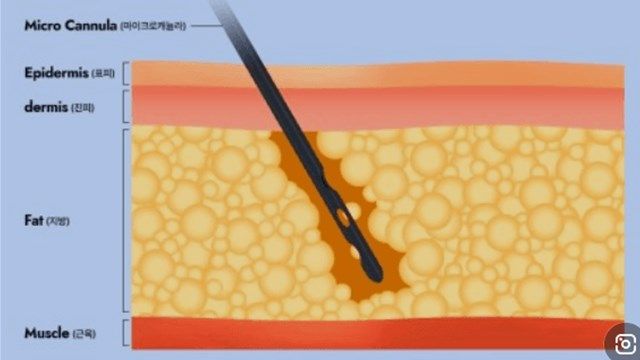
Liposuction removes localized fat deposits using small cannulas (typically 2–4mm) inserted through small incisions and connected to a vacuum source. The fat is mechanically aspirated; what remains is the underlying muscle and dermal layers, which contract over weeks to months to produce the final contour. The procedure addresses fat that resists diet and exercise — typically genetic deposits on the lower abdomen, flanks, outer thighs, inner thighs, arms, back, and chin/neck.

Technique categories in current Korean practice:

  • Tumescent liposuction — the foundation technique. Tumescent fluid (saline + dilute lidocaine + epinephrine) is infiltrated into the target area before fat removal. The fluid softens fat, reduces bleeding, and provides local anesthesia. Used as the basis for all modern liposuction techniques below.
  • Power-Assisted Liposuction (PAL, MicroAire) — the cannula vibrates rapidly, breaking up fat with less manual effort. Faster than traditional manual technique, lower surgeon fatigue, gentler on tissue. The most common Korean technique for soft-fat areas (lower abdomen, thighs, arms).
  • VASER (Ultrasound-Assisted Liposuction) — ultrasound probe emulsifies fat before aspiration. Better for fibrous areas (back, flanks, male chest, after prior procedures), revision cases, and high-definition contouring. Higher cost; longer procedure time per zone.
  • Laser-Assisted Liposuction (SmartLipo, SlimLipo) — laser energy melts fat before aspiration; some skin-tightening claims. Less common in Korean practice; published evidence for skin tightening is modest.
  • Water-Jet Assisted Liposuction (Body-Jet) — pressurized water disrupts fat. Used in some Korean clinics; reported gentler on tissue but less penetrating than VASER for fibrous fat.

Body zones commonly addressed:

  • Abdomen (upper, lower, full)
  • Flanks (love handles)
  • Back (bra-line, lower back)
  • Thighs (inner, outer, anterior, posterior)
  • Arms (upper)
  • Chin and neck (submental)
  • Calves and ankles (more challenging due to fibrous tissue and skin)
  • Male chest (gynecomastia or pseudo-gynecomastia)

Liposuction is not the same as abdominoplasty (tummy tuck). Abdominoplasty removes excess skin and tightens fascia; liposuction removes fat. Patients with significant skin laxity or post-pregnancy fascial separation need abdominoplasty, with liposuction as an optional adjunct. Liposuction alone in significantly lax-skin patients produces incomplete results.

Liposuction is also not a weight-loss procedure. The aspirated fat reduces volume in the treated area but produces minimal body-weight change. Patients seeking weight loss should pursue diet, exercise, or bariatric pathways; liposuction addresses contour for stable-weight patients.

What patients actually report

Our reviews database holds a meaningful number of Korean-clinic body-contouring entries. Patterns below are aggregated from international forums (RealSelf liposuction boards, Reddit r/PlasticSurgery), Korean platforms, and peer-reviewed satisfaction literature.

Recovery duration is the most-underestimated part of the procedure. Patients judging their result at 2–4 weeks frequently describe it as too swollen, too firm, or insufficiently refined. Reviewers whose consultation explicitly walked through the 2-week-to-6-month timeline describe the experience as predictable; reviewers without that grounding describe weeks 4–12 as anxious or alarming.

Korean conservative-removal occasionally creates expectation mismatch. Patients arriving with US-calibrated expectations of dramatic single-session volume reduction sometimes describe their first-session result as 'less than expected.' Reviewers who understood the Korean staged-removal philosophy at consultation describe the same outcomes as appropriate; reviewers who pushed for larger single-session removal report higher rates of post-op asymmetry and contour irregularity.

Compression garment compliance is a meaningful satisfaction differentiator. Patients who wore compression garments as prescribed (typically 4–8 weeks) describe better skin retraction and contour outcomes; patients who removed garments early or wore them inconsistently describe more visible swelling and slower contour resolution.

VASER patients consistently report less bruising and faster recovery than traditional liposuction patients in fibrous areas. The technique difference is most visible in back, flank, and male chest cases. For soft-fat areas (lower abdomen, thighs in many patients), the difference is smaller and the cost premium may not be justified.

The filtered liposuction reviews show what we have today.

Cautions from clinical practice

Liposuction in trained Korean hands has a well-characterized complication profile. The publicly reported issues fall into surgical complications (bleeding, infection, anesthetic, fluid management) and contour-related issues (asymmetry, irregularity, skin laxity, residual fat).

Contour irregularity (waviness, lumpiness). The most common complication, reported in 5–15% of cases, varying by surgeon experience and technique. Caused by uneven fat removal, scar tissue, or post-op compression issues. Most resolve over 6–12 months as tissue settles; persistent cases may need revision (touch-up liposuction or fat grafting to smooth depressions).

Asymmetry. Reported in 2–8% of cases. The difference between sides develops over the recovery arc and is most visible at 3–6 months. Mild asymmetry is generally accepted; significant asymmetry requires revision.

Skin laxity. When fat is removed but skin doesn't retract enough, visible looseness develops. Reported in 5–15% of cases, with risk strongly age-dependent and prior-weight-history-dependent. Younger patients with good elasticity have low rates; older patients or significant-weight-loss-history patients have higher rates. Severe cases may require skin-removal surgery (abdominoplasty, thigh lift, brachioplasty).

Seroma. Fluid collection under the skin, reported in 5–15% of cases. Usually resolves with compression and time; persistent cases need needle aspiration or drain placement.

Hematoma. Acute postoperative bleeding under the skin, reported in 1–3% of cases. Severe cases require surgical drainage.

Infection. Reported rates under 2% with standard antibiotic prophylaxis; severe infection requiring readmission is rare (under 0.5%).

Numbness. Temporary numbness in the treated area is universal in the early recovery; permanent numbness occurs in 1–5% and is usually patchy rather than complete.

Residual fat / under-correction. Some areas may need touch-up procedures to achieve target contour. Reported revision rates run 5–20% across primary cases, varying widely by patient expectation and surgeon technique.

Pulmonary embolism / fat embolism. Rare but serious. Reported rates for liposuction-related pulmonary embolism are under 0.1% with standard anesthetic care, sequential compression devices, and ambulation protocols. Fat embolism syndrome (where fat enters circulation systemically) is rarer but more serious; risk increases with very large-volume liposuction (>5L aspirate) which is why most Korean clinics avoid this in single-session.

Lidocaine toxicity. The dilute lidocaine in tumescent fluid has a maximum safe dose; this is the practical upper limit on how much area can be treated in a single session. Anesthesia teams calculate this carefully. Importantly for medical tourists: lidocaine plasma levels typically peak 8–12 hours post-procedure due to slow absorption from tumescent fluid. Patients should not be alone in a hotel room during the first overnight period after substantial liposuction; a clinic-arranged caregiver, traveling companion, or hospital admission is appropriate. Toxicity symptoms include perioral numbness, tinnitus, lightheadedness, and (in severe cases) seizures or cardiac effects.

Death. Liposuction-related mortality varies meaningfully by case profile. Modern outpatient single-zone liposuction in healthy candidates trends toward 1:30,000 or lower in published series; combined procedures (tummy tuck + lipo + breast augmentation), large-volume liposuction, and cases in patients with pre-existing cardiovascular conditions push the risk meaningfully higher (toward 1:5,000 in older combined-procedure cohorts). Liposuction is the cosmetic surgery with the highest mortality risk, and the risk profile is non-trivial; the safety differential between single-zone and combined-procedure liposuction is one of the most important reasons not to bundle multiple major procedures into a single anesthesia event.

Technique choice — what Korean clinics actually do

Most Gangnam body clinics offer multiple techniques; the choice depends on the case. Some clinics market themselves as VASER specialists; others as PAL or general liposuction practices.

TechniqueBest fit forTradeoffsPer-zone cost premium
Tumescent + PAL (MicroAire)Soft-fat areas: lower abdomen, thighs, arms; primary casesStandard technique; well-established; lower costBaseline
VASER ultrasound-assistedFibrous areas (back, flanks, male chest); revision cases; high-definition contouringBetter fat removal efficiency in firm tissue; less bruising; longer procedure time; higher cost+30–60% over PAL
Laser-assisted (SmartLipo)Small zones with skin-tightening goals (chin, small abdomen)Skin-tightening claims modest in evidence; longer procedure time per volume; higher cost+50–100% over PAL
Water-jet (Body-Jet)Soft-fat areas; some Korean clinicsGentler on tissue; less penetrating in fibrous fat+20–40% over PAL
Traditional manual (suction only)Rare in modern Korean practiceHigher surgeon fatigue; less consistent−10–20% below PAL (rare)

Many Korean clinics use a hybrid approach: VASER for the difficult areas (back, flanks, fibrous fat) and PAL for the softer areas in the same session. Ask whether the clinic uses pure PAL, pure VASER, or hybrid, and how they decide for a given case. The answer should reference fat firmness and skin retraction goals, not a one-size-fits-all preference.

The per-zone map

Liposuction addresses several distinct body zones; each has its own recovery profile, complication risk, and cost.

ZoneTypical aspirateRecovery profileNotes
Lower abdomen1–3LStandardMost common single zone; pairs with abdominoplasty for skin-laxity cases
Full abdomen + flanks (360)3–6LLonger; full compression for 6–8 weeksMost popular Korean package; total volume limits apply
Outer thighs ('saddlebags')0.5–1.5L per sideStandard; longer compressionCommon single-zone request; outer thigh fat is genetic and resistant to diet
Inner thighs0.5–1L per sideStandard; sensitive areaSkin laxity risk; honest consultation gates eligibility
Anterior thighs0.5–1.5L per sideStandardOften combined with outer thighs
Arms (upper)0.5–1.5L per sideStandard; compression sleeves 4–6 weeksSkin-laxity risk in older patients; brachioplasty alternative
Back (bra-line, lower)0.5–2L per areaFibrous tissue; VASER often preferredDifficult area; surgeon experience matters
Chin/neck (submental)50–200mlQuick recovery; visible immediatelyOne of the highest-satisfaction zones; small volume; good outcomes
Calves/ankles0.3–0.8L per sideFibrous tissue; longer compressionMost challenging zone; surgeon expertise required
Male chest (gynecomastia)0.3–1L per sideVASER often preferredCombined with gland excision when needed

Single-session aspirate totals over 5L (large-volume liposuction; the ASPS threshold counts total aspirate including tumescent fluid, not pure fat) are generally avoided in Korean clinics for safety reasons. Patients seeking high-total-volume removal are typically staged across two or three sessions over months.

Cost in Gangnam

Liposuction pricing in Korean clinics depends on technique, zone count, surgeon seniority, and whether fat grafting is integrated. The numbers below are clinic-quoted ranges as of 2026:

ProcedureKRW rangeUSD rangeNote
Single zone PAL (e.g., lower abdomen)₩3,000,000 – ₩5,000,000$2,300 – $3,800Mid-tier Korean PAL pricing
Single zone VASER₩4,500,000 – ₩7,000,000$3,400 – $5,300Premium for VASER technique
Abdomen + flanks (360 PAL)₩6,000,000 – ₩10,000,000$4,500 – $7,600Most popular package
Abdomen + flanks (360 VASER)₩8,000,000 – ₩13,000,000$6,100 – $9,900Premium tier
Multi-zone (abdomen + thighs + arms)₩10,000,000 – ₩15,000,000$7,600 – $11,500Volume discounts apply
Submental (chin/neck) only₩1,500,000 – ₩3,000,000$1,150 – $2,300Often single-session under sedation
Liposuction + fat grafting (face)₩5,000,000 – ₩9,000,000$3,800 – $6,800Integrated single-anesthesia case
Liposuction + fat grafting (breast)₩8,000,000 – ₩14,000,000$6,100 – $10,700Integrated; harvest from abdomen/thighs
Revision liposuction₩5,000,000 – ₩12,000,000$3,800 – $9,100Touch-up after asymmetry/contour issues; harder than primary

For comparison: equivalent single-zone PAL liposuction in the US typically runs $4,000–$8,000 per zone; full-circumferential abdomen-flank ('360 lipo') $10,000–$20,000; UK £3,000–£6,000 per zone. The Korean tier sits meaningfully below US/UK pricing while offering technique sophistication and senior-surgeon involvement comparable to those markets. The trip math for liposuction is favorable for multi-zone or combined-procedure cases where absolute savings are large.

Recovery, day by day

Liposuction recovery is meaningful and structured. The procedure-day-to-final-result arc spans 4–6 months; the meaningful phases:

WindowWhat you'll seeWhat you can do
Procedure dayGeneral or sedation anesthesia recovery; compression garment placed; significant tumescent fluid drainage from incision sites for 24–48 hours; sorenessStay in clinic 2–4 hours postoperatively; many discharged same day for single zone; overnight for larger cases
Day 1–3Significant swelling, bruising, soreness; continued tumescent fluid drainage; first dressing changeLimited activity; compression worn 24/7; first clinic check typically day 1–2
Day 4–7Bruising at peak; swelling persistent; soreness improving; able to do desk workLight desk work; gentle walking; compression worn 24/7
Day 7–10Bruising fading; first clinic check; many patients flying homeResume desk work; light walking; compression worn 24/7
Week 2–4Bruising mostly gone; swelling significant but improving; treated areas feel firm and lumpyLight cardio (walking, stationary bike); no upper-body strength training (if arms treated) or lower-body (if thighs treated)
Week 4–6Swelling halved; firmness softening; compression typically nighttime-only after week 4–6 (per surgeon)Resume light strength training; no high-impact (running, jumping) yet
Month 2–3Visible swelling resolving; contour beginning to emergeFull activity; full strength training; high-impact OK at month 3 typically
Month 4–6Final contour and skin retraction visibleFinal cosmetic outcome assessment; revision discussion if applicable

Trip duration: minimum 7-day stay (procedure + 5 days recovery + first clinic check before flying); optimal 10-day stay allows for two clinic checks and a more relaxed recovery. Compression garments are worn 4–8 weeks; patients flying home after 7 days continue compression at home.

The 10 questions to ask in your consultation

Suggested questions for your liposuction consultation. The technique choice, zone-by-zone planning, and surgeon-involvement questions are the highest-impact decisions.

  1. Which technique are you recommending and why? PAL vs VASER vs hybrid should be discussed with reference to your specific zones and fat firmness, not blanket clinic preference.
  2. What's the planned aspirate volume per zone, and what's the total? Total aspirate over 5L in single session is generally avoided; staged approaches should be discussed for larger goals.
  3. What's your cannula protocol per zone — size, depth (superficial vs deep), and direction? Cannula depth and approach conventions vary by zone and fat layer; superficial work tightens contour but increases skin-laxity risk if done aggressively.
  4. What's my realistic skin retraction at my age and skin elasticity? Honest answer references your tissue assessment and may recommend adjunct skin-tightening procedures or alternative approaches.
  5. Who specifically will be in the operating room, and what does the senior surgeon personally do during the case? Korean clinics vary widely in technician involvement; ask explicitly.
  6. What's your reported asymmetry and contour-irregularity rate? Specialist surgeons may have published or internal data; high-volume clinics may track outcomes.
  7. What's your protocol for asymmetry or contour issues if they develop? Touch-up timeline (typically 6+ months out), pricing, and approach should be discussed at primary consultation.
  8. Are you offering fat grafting integration in the same session? If you have appropriate volume needs at face/breast/buttock, ask about this; it's a meaningful efficiency.
  9. What's the all-in price including consultation, anesthesia, hospital fee, garment, post-op care, and follow-up? Get the full-stack number in writing; itemized line items reveal hidden costs.
  10. What happens if I'm dissatisfied at 4–6 months? What's the touch-up policy? Standard at premium Korean clinics is a discounted touch-up if results are meaningfully below expectation; clinics that don't address this question may be in marketing mode.

Choosing a clinic

Liposuction is offered by general plastic surgery clinics, body-contouring specialist clinics, and dedicated liposuction practices across Gangnam.

  • Board-certified plastic surgeon with high body-contouring case volume — typically several hundred liposuction cases annually for premium-tier Korean practices.
  • Documented technique and outcome protocols — pre-procedure markings, photography from standardized angles, aspirate volume documentation, post-op compression protocol, scar-management protocol.
  • Dedicated revision experience — for revision candidates specifically; revision liposuction is meaningfully harder than primary and not all clinics handle it well.
  • Anesthesia by board-certified anesthesiologist — not nurse-anesthetist or surgeon-administered, especially for multi-zone or large-volume cases under general anesthesia.
  • Hospital-grade operating facilities — accredited; overnight observation if needed; emergency readiness.
  • Modern technique availability — at minimum tumescent + PAL; ideally VASER capability for fibrous areas.
  • Transparent zone-by-zone pricing — most Korean clinics quote per zone; beware all-inclusive flat prices that don't specify zone count or volumes.
  • Fat grafting integration capability — for patients who want it; not all liposuction clinics offer this in the same session.

The filtered clinic directory shows current matches. For liposuction specifically, the dedicated body-contouring specialist subset is meaningful but smaller than the general plastic surgery clinic count; both can handle primary cases well.

Risks, complications, and what a safe clinic looks like

The published AE rates for primary liposuction in trained Korean hands sit roughly here: contour irregularity 5–15%; asymmetry 2–8%; skin laxity 5–15% (age-dependent); seroma 5–15%; hematoma 1–3%; infection under 2%; permanent numbness 1–5%; revision rate 5–20%; pulmonary embolism under 0.1%; mortality under 1:5,000 (lower in single-zone outpatient cases, higher in combined-procedure or large-volume cases).

Recognition. Patient-side signals worth knowing: sudden severe shortness of breath, chest pain, or oxygen drop in first week (potential pulmonary embolism — emergency); rapid one-sided enlargement in first 48 hours (potential hematoma); fever, redness, or unusual discharge from incision sites (potential infection); persistent fluid collection at week 3+ (potential seroma — needs aspiration).

Documentation. Pre-procedure photos from standardized angles in standardized lighting; weight and BMI; body-zone-specific measurements; aspirate volumes per zone; post-procedure photos at 1 week, 6 weeks, 3 months, 6 months. Clinics that maintain this protocol are operating in outcome-tracking mode.

Safety considerations specific to international medical tourism. The 7-day minimum stay is non-negotiable for multi-zone liposuction because the first clinic check at day 1–2 and the second at day 5–7 catch early issues that matter (drainage problems, infection signs, fluid collection). The compression garment fit is critical and often adjusted at the day 1–2 check. Patients flying home before day 7 should expect higher rates of recovery complications.

Who is a good candidate (and who is not)

Liposuction has well-defined candidacy. The ideal candidate is age 18+ in good general health, near or at goal weight (BMI under 30 generally; under 32 acceptable with case-specific assessment), with localized fat deposits resistant to diet and exercise, good skin elasticity for the planned removal, no active medical conditions that increase surgical or anesthetic risk, and realistic expectations grounded in the 4–6 month timeline.

Reasons to delay or skip:

  • Significantly elevated BMI (over 32 generally). Liposuction is not a weight-loss procedure; higher BMI increases anesthetic risk, complication rates, and skin-laxity issues without solving the underlying weight question.
  • Pregnancy or breastfeeding. Postpone liposuction until 6+ months after weaning; pregnancy changes body shape meaningfully.
  • Significant skin laxity. Patients with substantial loose skin from prior weight loss or post-pregnancy fascial separation typically need skin-removal procedures (abdominoplasty, thigh lift, brachioplasty), not liposuction alone.
  • Active or unstable medical conditions. Uncontrolled diabetes, cardiovascular disease, bleeding disorders, or other systemic conditions require evaluation and stabilization before elective liposuction.
  • Unrealistic expectations. Patients seeking weight loss, dramatic single-session removal, or anatomic results that exceed what surgical technique can deliver are mismatched in expectation.
  • Active smoking. Smoking impairs healing and increases complication rates; most surgeons require cessation 4–6 weeks pre and post procedure.
  • Body dysmorphia / unstable body-image expectations. Repeated revision-seeking patterns or unstable expectations are red flags that warrant pre-surgical psychological assessment.

For older patients (over 50): skin elasticity declines with age; honest consultation may recommend skin-tightening adjuncts (abdominoplasty for abdomen, brachioplasty for arms, thigh lift for thighs) rather than liposuction alone.

When to travel and how long to stay

Liposuction requires a meaningfully longer stay than non-surgical procedures because the early recovery checkpoints matter and flying with significant swelling and compression is uncomfortable.

Minimum: 7 days. Procedure day, 5 days recovery (with first clinic check at day 1–2 and second at day 5–7), drainage stabilization, and clearance to fly. Tight but feasible for single-zone or two-zone cases.

Optimal: 10 days. Procedure + 8 days recovery + 2–3 clinic checks + drainage stabilization + a more relaxed recovery before flying. Most international patients choose this for multi-zone cases.

Long-arc follow-up: 3 and 6 month checks, typically managed via remote photo submission for international patients. Some clinics specifically schedule the 6-month follow-up for an in-person visit; this is recommended if any early-recovery concerns arose.

Combination trips: Liposuction generally should not be combined with other significant surgical procedures (rhinoplasty, breast augmentation) in the same trip due to cumulative recovery burden, anesthesia time, and lidocaine dosing limits. Combining with non-surgical procedures (botox, filler before lipo, light skin treatments after recovery) is reasonable but should be staged.

Touch-up sessions: If revision becomes needed (asymmetry, contour irregularity), typically scheduled 6+ months out. Most revisions require a second separate trip.

Tax refund, cash discount, and seasonal deals

Three layers of price reduction stack at most clinics. Liposuction is a high-absolute-amount procedure, so percentage savings translate to meaningful dollar savings:

VAT refund. Up to 10% of the procedure cost, recoverable at Incheon Airport for foreigners on tourist visas — but only at clinics registered with Korea's Medical Tourist Tax Refund program. Cosmetic liposuction generally qualifies; medical-coded cases (lipedema) sometimes don't. Either Global Tax Free or KT Tourism Tax Refund handles most refunds. The tax refund calculator shows what you'll actually recover after fees.

Cash discount. Typically 5–10%. On a ₩10,000,000 ($7,600) multi-zone case, this is ₩500,000–₩1,000,000 ($380–$760) in savings.

Seasonal promotions. Less common for liposuction than for non-surgical procedures, since clinical capacity and surgeon scheduling drive the calendar more than promotional cycles. Some clinics offer modest discounts for early-year scheduling or for combined procedures (liposuction + fat grafting bundles).

Currency exchange: Pricing in KRW is typically locked at booking. Patients booking 3–6 months ahead can occasionally benefit from favorable USD-to-KRW movement; the inverse risk is also real.

Alternatives to consider instead

Liposuction is the right answer for localized fat deposits in stable-weight patients with good skin elasticity. If your case is something else, consider these alternatives:

  • Significant skin laxity. Abdominoplasty (tummy tuck), thigh lift, or brachioplasty (arm lift) address skin removal that liposuction can't. Often combined with liposuction in a single procedure.
  • Generalized weight loss goals. Diet, exercise, or medical/bariatric pathways are appropriate. Liposuction is not a weight-loss tool.
  • Mild cosmetic refinement. Non-surgical body-contouring devices (CoolSculpting, EMSculpt, ultrasound or laser-based fat reduction) produce modest results without surgery. Cumulative effect over multiple sessions is meaningful for the right candidate but won't match what liposuction can do.
  • Cellulite-only concerns. Liposuction does not treat cellulite (which is a fibrous-band issue, not just fat); some patients with mild fat may see modest improvement, but cellulite-specific treatments (Cellfina, subcision, RF treatments) are more direct.
  • Lipedema. A specific medical condition causing disproportionate fat deposition with characteristic patterns. Liposuction (typically water-jet or gentle PAL) can be helpful but should be performed by surgeons with explicit lipedema experience and as part of a broader medical management plan.
  • Non-treatment. Some patients reassess after consultation and choose to live with their natural anatomy. This is a legitimate outcome.

A serious liposuction consultation will sometimes recommend weight loss first, skin-removal adjuncts, non-surgical alternatives, or non-treatment. That signals an outcome-focused practice rather than a high-volume operation.

The bottom line

The case for Gangnam for liposuction rests on three pillars. First, technique sophistication — VASER ultrasound-assisted, PAL, and hybrid approaches are widely available, with senior-surgeon involvement at premium-tier clinics. Second, fat-grafting integration — Korean clinics commonly offer combined liposuction-plus-fat-grafting in a single anesthesia event, which is a meaningful efficiency vs. Western markets where surgeons often stage these. Third, meaningful price differential vs. Western markets — a typical multi-zone case in Korea runs $4,500–$11,500 vs. $10,000–$20,000+ in the US for equivalent work, with absolute savings ($5,000–$10,000) that easily cover travel from any origin.

The case against is that liposuction is a recovery-intensive procedure with a 4–6 month settlement timeline and the same long-distance follow-up friction as other surgical procedures. Patients with elevated BMI or significant skin laxity may be genuinely poor candidates regardless of clinic; in those cases, no amount of technique sophistication substitutes for honest candidacy assessment. Patients seeking dramatic single-session results are likely to be disappointed by the Korean conservative-removal philosophy and should either recalibrate expectations or consider markets that match their preferred volume style (with the higher complication rates that often accompany aggressive removal).

The patients for whom Gangnam liposuction is most clearly the right call are those near or at goal weight with localized fat deposits; good skin elasticity for the planned removal; realistic expectations grounded in the 4–6 month timeline; willingness to accept the 7–10 day stay; and origins where flight cost is not prohibitive relative to the absolute savings vs. Western markets. The trip math is particularly favorable for multi-zone cases, combined liposuction-plus-fat-grafting cases, and revision-candidate patients seeking specialist Korean experience.

For revision candidates: revision liposuction is meaningfully harder than primary work, and not all Korean clinics handle it equally well. Specialist clinics with explicit revision experience exist; primary-focus clinics should be evaluated more carefully for revision indications.

If you do come, four practical notes. First, plan for the 10-day optimal stay rather than the 7-day minimum if your schedule allows; the second clinical check at day 5–7 and the more relaxed recovery materially reduce risk of early-detection issues. Second, get the technique, planned aspirate per zone, and total aspirate documented in writing before the procedure; this matters for any subsequent revision conversation. Third, plan for the 4–6 month settlement timeline mentally — the 2-week or 6-week result is not the final result. Fourth, the compression garment compliance question is part of the procedure outcome; clinics that downplay this are not optimizing for the patient's long-term result.

Liposuction is one of the K-beauty procedures where Korean conservative-removal philosophy materially shapes outcomes vs. Western markets, and where the technique-and-experience differential between premium-tier Korean clinics and lower-tier operations is large. The consultation conversation that matters most is the technique-and-zone planning conversation, not the pricing conversation. Korean surgeons typically engage substantively with this when given the opportunity, and the resulting outcomes for well-matched patients are competitive with any global market.

Opiniões de pacientes (25)

Relatos de pacientes resumidos por IA, provenientes de fóruns externos. Apresentados no idioma original; resumos traduzidos em breve.

PurseForum Braun PS 2023-06-01
Leia a resenha completa →
PurseForum Girin PS 2023-05-30
Leia a resenha completa →
RealSelf Girin PS 2023-05-26
Leia a resenha completa →
PurseForum Girin PS 2023-05-20
Leia a resenha completa →
PurseForum Braun PS 2023-05-17
Leia a resenha completa →
PurseForum Girin PS 2023-05-16
Leia a resenha completa →
PurseForum Mighty PS 2023-04-10
Leia a resenha completa →
RealSelf Nana PS 2023-02-26
Leia a resenha completa →
RealSelf Girin PS 2022-10-19
Leia a resenha completa →
RealSelf DA PS 2022-10-07
Leia a resenha completa →

Frequently Asked Questions

Is turbinoplasty a complicated surgery?

It needs an additional machine. Without the machine, turbinoplasty cannot be done.

What’s the best way to lengthen the chin without getting a chin implant?

It's better to choose between fat grafting and fillers. If you don't have a big problem with your chin, I recommend trying fillers first and decide.

Are there any risks or long-term effects of chin fat grafting?

There is a possibility that over time, the chin may look wider instead of sharper and more V-shaped due to the movement and expansion of fat. It is recommended to consult with a qualified plastic surgeon for a personalized assessment and recommendation.

Should I put fat under my eyes to fill hollow areas or will it cause droopy skin over time?

According to some clinics, putting fat under the eyes may cause more droopy under-eye bags and saggy skin over time. However, every individual has different facial features and anatomy. It is recommended to consult with a qualified plastic surgeon who can assess your specific situation and provide the most appropriate recommendation.

Has anyone had negative side effects or regret having buccal fat removal? What are your thoughts on this procedure?

I don't recommend the surgery either.

What do you guys think about buccal fat removal? Is it worth it?

It is not recommended.

What is the difference between cheek liposuction and buccal fat removal in terms of appearance?

'Buccal fat removal' is the removal of fat by incision in the mouth, while liposuction is a more passive way. Cheek liposuction is recommended instead of buccal fat removal.

Are there any risks or potential complications with cheek liposuction?

Cheek liposuction may not leave any bumps if performed correctly. However, it is important to consult with a qualified and experienced surgeon to minimize any risks or complications.

Should younger patients consider getting a facelift after cheek liposuction?

In most cases, younger patients do not need a facelift after cheek liposuction as it is a less invasive procedure. Cheek liposuction can help improve facial contour and reduce unwanted fat, providing a more refreshed and youthful appearance.

What clinic did the patient go to for the procedure?

The patient went to the clinic called 'Aibo and Aibao' according to Google Translate.

How is cheek liposuction different from buccal fat removal in terms of appearance?

'Buccal fat removal is the removal of fat by incision in the mouth. Liposuction is a more passive way.'

Do they look different? I'm scared cheek lipo may leave bumps

Cheek liposuction is a minimally invasive procedure that helps to contour and slim the face. It is performed using a small cannula to remove excess fat deposits. The procedure is designed to provide a more sculpted appearance without leaving noticeable bumps. However, it is important to consult with a qualified and experienced plastic surgeon to ensure the best results and minimize any potential risks.

Do you recommend facelift for younger patients too after cheek lipo?

In general, younger patients may not require a facelift after cheek liposuction. Cheek liposuction is usually sufficient to achieve the desired facial contouring and slimming effect. However, it is always best to consult with a plastic surgeon who can assess your individual situation and provide personalized recommendations.

I wonder why they would make such mistakes. According to the post, she said she has almost no bones left, all the nerves and teeth were damaged and she couldn’t even lift up her tongue. 😔 Could it be they let some new doctors or trainees perform the surgery?

Without knowing the specific details of the surgery or the mistakes that occurred, it is difficult to speculate on the reasons behind such complications. Mistakes can happen in any medical procedure, and it is important for patients to do thorough research and choose a reputable and experienced plastic surgeon. It is unlikely that clinics would let new doctors or trainees perform surgery without proper supervision and guidance, but it is crucial to select a qualified and skilled surgeon for any cosmetic procedure.

What is happening in this photo? (referring to a photo mentioned in the conversation)

Without the context of the specific photo mentioned, it is difficult to provide an accurate answer. However, if the photo is related to a negative outcome or complications from a surgical procedure, it is important to understand that every surgery carries risks and potential complications. It is crucial to consult with a qualified plastic surgeon and thoroughly discuss the procedure, potential risks, and expected outcomes before making any decisions.

I had a consultation with that clinic last year and paid 300k won. Can you share your experience?

As an expert, I can provide general information and answer questions about liposuction. However, I cannot share personal experiences or specific reviews about clinics or surgeons. It is important to rely on your own research, consultation with qualified professionals, and personal judgment when choosing a clinic or undergoing any medical procedure.

Is liposuction a recommended procedure?

Yes, liposuction is a commonly recommended procedure for removing excess fat deposits.

Can liposuction be performed on arm fats?

Yes, liposuction can be performed on arm fats. It is a safe and effective method to remove excess fat in the arms.

Which clinic would you recommend for arm liposuction in South Korea?

I recommend consulting with a board-certified plastic surgeon in South Korea who specializes in liposuction to determine the leading clinic for your specific needs.

Does Cohen do fat graft?

Yes, it is possible.

Does Cohen do rib rhino?

Yes, it is possible.

Ooooo does he do functional too? 😲 Sorry for so many questions haha

He does Just septoplasty.

What about turbinoplasty?

He doesn't do turbinoplasty.

Will coughing and smiling too much cause my nose to become deformed after rhinoplasty? I had Alar base reduction and I'm concerned that my alars will widen from all that 😭

Be careful for a month. Normally it shouldn't be a big issue, but you better be careful.

I’m quite worried about this as well because I tend to sniffle a lot when it’s cold.. I’m worried I’ll sniffle a lot after rhino

You'd better do it after you recover.

If I'm doing fc, eyes and nose all in one trip, how should I space them out? Should I do eyes and nose on first day, then do fc surgery on the day after? I'm worried my body won't react well to all the anesthesia

FC ->10 days after-> eye+nose. The nose should be done last.

I have a question about unevenness after under eye fat repositioning, what can you do about it? What filler is good? Fat transfer? Any other solutions?

It's a good idea to try the filler. I recommend Restylane or Juvederm for fillers. Fat transplantation is also a good option.

Can we still do autologous rib rhino if we got abdominal lipo and BA fat transfer a couple of days earlier?

During abdominal liposuction, the cannula injures the layer of your fat. Therefore, there is a possibility that inflammation may occur when harvesting costal cartilage. It's okay if the abdominal liposuction site and the costal cartilage harvest site are far apart. However, if the surgical site overlaps even a little, it should be done after sufficient recovery.

Hi David_HONG, if the aim is to get a smaller and shorter jawline from the side view, would going through jawline surgery be ideal?

Yes, I think jawline surgery would be ideal for achieving a smaller and shorter jawline from the side view.

I got Sculptra in my nasol folds and it worked wonders! Night and day

I don’t think they use Sculptra often in Korea, but it can be effective for improving nasolabial folds.

How long after the injection did you see results?

Approximately six weeks. You have to wait until collagen is produced.

Do you think fat graft at nasolabial fold last?

Fat can be absorbed, and there is a possibility of displacement. It's just a possibility.

Is it common to do facial lipo and Inmode as well?

Yes, it is common to do facial liposuction and Inmode together. Some people choose to undergo both procedures to achieve the desired results.

Is there a reason people choose inmode over getting facial lipo?

Yes, there are several reasons why people choose Inmode over getting facial liposuction. Inmode is a less invasive procedure that is preferred by those who are scared of surgery. Additionally, Inmode can help regenerate the skin and improve dark circles. It depends on the desired results and each person's case.

People who are scared of surgery prefer inmode. Is this true?

Yes, people who are scared of surgery tend to prefer Inmode because it is a less invasive procedure. Inmode can still provide great results, but it is less dramatic compared to facial liposuction.

Do the red light LED’s really make that much of a difference for when patients come in for aftercare? Or are they kind of a gimmick to make a patient feel like they are getting good aftercare treatment?

It is said that machine manufacturers are theoretically helpful. No one really knows how helpful it is. It would be better than not.

If I've gotten threadlifts and there's pretty serious indents/dimpling, do you have any tips to help this go away quicker? It's been almost 2 weeks since I've gotten them and it's still bad. My clinic's telling me that it will only go away in 2-3 months.

When you have dimples, your doctor can fix them by controlling your skin. It'll get better over time. The dimples will disappear as the threads melt away.

If we remove silicone bridge from our rhinoplasty, can it make our nose upturned?

If you remove silicone, the bridge will be lowered and the tip will likely look slightly upended. But it's not necessarily the case.

Is it true that threads make it harder for the surgeon to perform a facelift in the future?

Half is right. If you do a lot of thread lifting, your skin may get stuck. But my friend did a lot of thread lifting, but she did face lifting without any problems.

Is HIFU/Ulthera safe to do or will it affect the SMAS layer when doing a facelift?

It won't be a problem.

Can you do Ultherapy after rhinoplasty?

How soon will it be? I recommend you do it in a month.

For face liposuction, is the downtime long? Or can you return back to normal activities after surgery?

It's possible to live a normal life. But you have to wear a compression band on your face and you can get bruises and swelling.

Are clinics able to sue or use the law against foreigners if they leave an unfavorable online review?

Many clinics sue patients for defamation. However, if a patient objectively reviews only the facts online, most of them are acquitted. The clinic could sue, but the police wouldn't be able to investigate. I saw a foreigner sue the clinic, but I didn't see clinics sue foreigners. I'll ask my lawyer friend.

How can a person tell if scar tissue has formed inside the nose after rhinoplasty?

It's hard to tell the inside of the nostril.

Can we use Vaseline or petroleum jelly inside our nose if it’s dry and there are crusts?

How long has it been since you had surgery? Try washing it with saline.

When would it be safe to use an infrared sauna after rhinoplasty?

1 month after.

Is it possible to do fat graft after 2-3 years of filler?

Yes, it is possible to do fat graft after 2-3 years of filler.

Is it normal for the nose to have more swelling at 1 month, compared to 2 weeks post-op?

It can vary from person to person, but it is possible for the nose to have more swelling at 1 month compared to 2 weeks post-op.

Why may the tips be upturned after liposuction?

The tips may be upturned after liposuction for a number of reasons. It could be due to the angle created by the doctor during the procedure, the deformation of the angle if the pillar is not strong, or the nose becoming upturned due to contracture.

Can liposuction be done on the abdomen and fat be grafted to the face and breast as well?

Yes, liposuction can be done on the abdomen. However, there is no relation between liposuction and grafting fat to the face and breast.

Is liposuction the most obvious way to get slimmer arms compared to onda coolwave therapy and mesolipolysis injection?

Yes, liposuction is the most obvious way to get slimmer arms compared to onda coolwave therapy and mesolipolysis injection.

Is using a columella strut the most common way to make the angle of the nose more upturned?

Different surgeons have different techniques and experiences, so there are different surgical methods used to make the angle of the nose more upturned. Using a columella strut is one of the common ways, but there are also other methods like using sutures.

Is lip shape surgery popular in Korea?

No, lip shape surgery is not popular in Korea. It is more commonly seen in Thailand.

Is there a way to elongate the length of lips and fix asymmetry without creating the 'm' shape?

There are ways to elongate the length of lips and fix asymmetry without creating the 'm' shape personally. These can be achieved with lip fillers instead of surgery.

Is lip corner lift surgery performed to correct Resting B*tch Face (RBF)?

Yes, lip corner lift surgery is performed to correct Resting B*tch Face (RBF).

What does RBF stand for?

RBF stands for Resting B*tch Face.

Is lip corner lift surgery always performed in a way that creates a 'Joker smile' shape, or are there surgeons who can avoid that shape?

There are surgeons who can avoid creating the 'Joker smile' shape in lip corner lift surgery. Not all surgeons perform the procedure in the same way, and it's important to choose a surgeon who understands your desired outcome.

Which part of the face does a mini lift help to improve?

A mini lift helps to improve the jawline and the lower line of the face.

Does a mini lift also help improve the neck?

A mini lift may help to improve the neck to some extent, but it is not the primary focus of the procedure.

Is a lip lift procedure ideal? Are there any concerns about scarring?

Lip lifting can be done through incision or using a thread. There may be concerns about scarring, but it depends on the individual and their healing process. It is best to consult with a plastic surgeon to discuss the potential risks and benefits.

Is there a procedure to reduce the gap between the eyes and the eyebrows without doing Double Eyelid Surgery (DES)?

Depending on the individual's eyes, they can consider doing DES or a sub eyebrow lift to reduce the gap between the eyes and the eyebrows. It is recommended to consult with a plastic surgeon for a personalized evaluation and recommendation.

What can be done to get rid of dark circles without having eyebags, just really dark under eye circles that can't seem to be covered with concealer?

The treatment for dark circles depends on the underlying cause. Factors such as pigmentation, blood vessels, and thin skin can contribute to the appearance of dark circles. Potential treatments may include laser therapy, dermal fillers, skin lightening creams, or in some cases, surgical procedures like fat repositioning. It is best to consult with a dermatologist or plastic surgeon for a proper evaluation and recommendation.

Can Inmode or other non-invasive treatments provide similar results to facial liposuction for the cheeks?

Non-invasive treatments like Inmode can provide noticeable results for facial slimming and skin tightening in the cheeks. However, the level of effectiveness may vary depending on individual factors such as skin elasticity and fat distribution. It is recommended to consult with a medical professional who specializes in these treatments to determine the most suitable option for your specific case.

Can relocating the fat under the eyes help with dark circles?

Yes, fat repositioning or relocating the fat under the eyes can help improve the appearance of dark circles. By redistributing the fat, it can provide a smoother and more rejuvenated appearance to the under-eye area. However, the suitability of this procedure depends on the individual's specific needs and should be discussed with a qualified plastic surgeon.

Is it common to combine facial liposuction with Inmode or other non-invasive treatments?

Combining facial liposuction with Inmode or other non-invasive treatments is not uncommon. The choice between surgical and non-surgical options depends on the individual's needs, preferences, and desired results. A comprehensive consultation with a plastic surgeon will help determine the most suitable approach for achieving your aesthetic goals.

Are there any differences in the results between facial liposuction and Inmode or other non-invasive treatments?

The results of facial liposuction and Inmode or other non-invasive treatments can vary based on individual factors and goals. Facial liposuction provides a more precise and certain outcome, but it may require additional procedures like threading for lifting if excessive fat is removed. Non-invasive treatments like Inmode offer great results with less invasiveness, although the overall effect may be less dramatic. Each option has its pros and cons, and the choice depends on individual preferences and circumstances.

Can Inmode help improve dark circles?

Yes, Inmode can help with the improvement of dark circles. In addition to its slimming and tightening effects, Inmode treatments can stimulate collagen production and improve skin quality, leading to a reduction in the appearance of dark circles. However, the effectiveness may vary depending on the individual's specific condition and should be discussed with a qualified medical professional.

Are the results of facial liposuction or Inmode for dark circles long-lasting?

The longevity of the results from facial liposuction or Inmode for dark circles can vary. Some individuals may experience long-lasting improvement, while others may notice a gradual return of dark circles over time. Factors such as aging, lifestyle, and individual characteristics can influence the duration of the results. It is important to have realistic expectations and maintain regular follow-ups with a medical professional to monitor and address any changes.

Is it safe to use permanent makeup (tattoo) to cover under-eye pigmentation?

Using permanent makeup, which is essentially tattooing, to cover under-eye pigmentation is an option some individuals consider. However, it is important to exercise caution and do thorough research before opting for this procedure. Permanent makeup carries some risks, such as allergic reactions or dissatisfaction with the results. It is recommended to consult with a professional and experienced permanent makeup artist to discuss the potential risks and benefits specific to your situation.

Does laser treatment help with dark circles or just eyebags?

Laser treatment can be effective in reducing the appearance of both dark circles and eye bags. The type of laser used and the specific treatment approach will depend on the underlying causes and individual factors. Laser therapy can target pigmentation, stimulate collagen production, and improve skin quality, leading to a reduction in the appearance of dark circles and eye bags. It is best to consult with a dermatologist or plastic surgeon to determine the most appropriate laser treatment for your specific concerns.

What are the potential treatments for dark circles, considering factors such as pigmentation, blood vessels, and thin skin?

The treatment options for dark circles depend on the specific factors contributing to their appearance. For pigmentation-related dark circles, treatments such as topical creams, chemical peels, or laser therapy may be recommended. For dark circles caused by prominent blood vessels, laser therapy or injectable fillers may be considered. In some cases, addressing thin skin may involve procedures like fat repositioning or filler injections. It is advisable to consult with a dermatologist or plastic surgeon for a comprehensive evaluation and personalized treatment plan.