
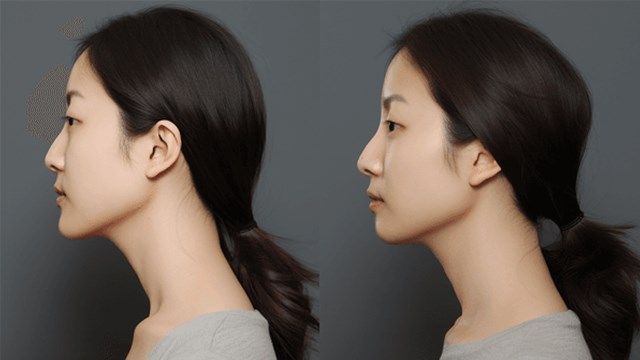
Chin Reduction (Genioplasty)

Surgical
Permanence
Result is permanent (bone is repositioned and fixed with titanium plates that often remain in place for life)
Downtime Days
1 hospital night, 5–7 days significant swelling, 4–6 weeks visible swelling, 3–6 months final settling
Anesthesia
General anesthesia is standard; in-house or dedicated anesthesiologist coverage is the norm at established contouring clinics
Cost Range K R W
₩4,500,000 – ₩9,000,000 (single-axis to T-osteotomy; bundled discount in V-line plans)
Cost Range U S D
$3,400 – $6,750
Min Trip Days
10
Optimal Trip Days
14
Age Min
18 (skeletal maturity); upper limit determined by general surgical fitness rather than chronological age

What might surprise you

  • The T-osteotomy is the Gangnam default, not the global one. Most Western surgeons perform single-axis horizontal-osteotomy genioplasty, which allows the chin segment to move forward, backward, up, or down but not narrow. The T-osteotomy (originally described by Hofer in 1942 and refined into Korean practice over decades) cuts the segment in two pieces and lets the surgeon both narrow and reposition. For patients whose chin reads wide as well as long or prominent, the T-osteotomy is specifically designed to address width in addition to projection.
  • Most cases combine with mandibular angle reduction. Single-procedure reduction genioplasty is reasonable when only the chin is the concern, but a meaningful share of patients combine chin work with mandibular angle reduction in the same operation as part of a V-line plan. Combined cases price at a discount versus the sum of standalone procedures.
  • The mental nerve runs through the area you're cutting. The mental nerve exits the chin bone through small foramina on each side and supplies sensation to the lower lip and chin skin. The osteotomy cut is below the level of these foramina by design, but bone displacement can stretch or compress the nerves. Temporary numbness in the first weeks is common; permanent partial numbness is reported in roughly 1–3% of cases.
  • Reduction genioplasty is often misunderstood as chin filler's surgical equivalent. It is the opposite. Chin filler advances a recessed chin or balances minor asymmetry; reduction genioplasty subtracts from a prominent or long chin. The two procedures address opposite indications. The surgical equivalent of chin filler — for chin advancement — is augmentation genioplasty (with implant) or sliding genioplasty (advancing the cut chin segment forward). Confusing the directions at the consultation stage is the most common conversion-cost mistake patients make.
  • The procedure leaves no external scar. The Korean approach uses an intraoral incision at the lower-gum line; the surgeon works through it to expose the chin bone. Intraoral healing carries an infection-risk vector through the oral cavity but produces no visible facial scar.

Chin reduction (medically: reduction genioplasty) is the surgical reshaping of the chin bone to make it shorter, less protruding, less wide, or some combination of those. It is one of the smaller-volume facial-contouring procedures in Korean practice but a category where Korean technique conventions diverge most clearly from the Western default. The technique convention here is the T-osteotomy: the chin segment is cut in a T-shaped pattern, which lets the surgeon narrow the chin in addition to advancing or setting it back. The T-osteotomy itself was first described in Western surgical literature decades ago (Hofer 1942; Trauner and Obwegeser 1957), but Korean V-line practice refined and standardized it as the default approach for combined reduction-and-narrowing cases. Most Western surgeons today still default to the standard horizontal-osteotomy genioplasty that allows movement in only one or two axes. The technique-mix difference shows up in the result.

This guide is for patients with a specifically chin-driven concern: a chin that reads long, prominent, wide, or asymmetric, confirmed on 3D CT imaging as the source of the cosmetic question. Patients whose underlying concern is the broader lower face (square jaw, fuller cheek, combined skeletal width) should look at the umbrella facial-contouring guide first; chin work is often combined with mandibular angle reduction in a V-line plan rather than performed alone. Patients whose concern is a recessed or weak chin should look at the chin-augmentation page (with implant or filler) rather than this one — reduction genioplasty addresses chins that are too prominent, not chins that need projection added.

One framing note up front. Chin filler can advance a recessed chin or balance asymmetry for 12–18 months at a time; it cannot reduce or shorten a prominent chin. Reduction genioplasty is bone surgery, with the recovery and risk profile that implies. The two procedures address opposite indications and shouldn't be confused at the consultation stage — but reduction-genioplasty patients sometimes try chin filler first because it sounds like a less invasive option, then have to work backward to surgery once they realize the filler can't subtract. Understanding which direction your case requires is the first decision.

What reduction genioplasty is (and is not)

Reduction genioplasty is the surgical reshaping of the chin bone (the mentum) to reduce its size, shorten its vertical height, narrow its width, set it back, or some combination. The surgeon makes an intraoral incision below the lower lip, dissects through soft tissue to expose the chin bone, and uses a bone-cutting saw or piezoelectric device to make the planned osteotomy cut. The chin segment below the cut is repositioned (moved upward for vertical reduction, backward for setback, narrowed in the T-osteotomy modification, or some combination), then fixed in the new position with titanium plates and screws. The masseter and chin musculature reattach to the repositioned bone over weeks.

The procedure is not the same as augmentation genioplasty, which advances or projects a recessed chin using implant or moved bone segment. Reduction reduces; augmentation adds. Patients with a recessed chin are candidates for augmentation, not reduction.

It is not the same as chin filler. Filler can soften a recessed chin contour or balance asymmetry for 12–18 months; it cannot subtract from a prominent chin. The two procedures move in opposite directions. Patients sometimes try filler first thinking it's a reversible alternative; it isn't an alternative to reduction at all.

It is also not the same as double-jaw surgery, which repositions both upper and lower jaws together for orthognathic indications. Reduction genioplasty addresses the chin segment specifically; double-jaw addresses the broader skeletal relationship. Patients with severe Class II or Class III malocclusion need orthognathic workup, not isolated chin reduction.

What patients actually report

Our reviews database holds zero genioplasty-specific entries today, which reflects the procedure's lower volume relative to the K-beauty headliners and the way Gangnam clinics often code genioplasty under the broader "facial contouring" umbrella (where 67 patient reports do exist). Patterns below are aggregated from international forums (RealSelf genioplasty boards, Reddit r/PlasticSurgery), peer-reviewed patient-satisfaction literature, and the umbrella facial-contouring corpus.

Result satisfaction tracks the multi-axis correction rather than the size of the change. Patients who reported the highest 12-month satisfaction often had subtle multi-axis corrections (slight setback plus slight vertical reduction plus slight narrowing in the T-osteotomy) rather than dramatic single-axis reductions. The aesthetic logic: a chin that reads as out of proportion is usually mismatched on more than one dimension, and addressing all of them at once produces a more harmonious result than aggressively reducing one axis.

Recovery duration is consistently shorter than patients expect for bone surgery — but not as short as the marketing suggests. Reviewers describe the chin as one of the easier facial-contouring zones to recover from: less swelling than mandibular angle reduction, faster return to chewing, less visible bruising. But "easier" still means 4–6 weeks of visible swelling and 3–6 months for the final shape to settle.

Sensory changes of the lower lip and chin are normalized in the corpus and real. Numbness or altered sensation in the first weeks is common; the 1–3% permanent partial numbness rate from the published Korean literature is consistent with what surfaces in longer-term review threads. Reviewers who set this expectation explicitly during the pre-op consultation report less anxiety about the post-op course than those who weren't told.

The T-osteotomy is mentioned by name in the better-quality reviews. Patients who researched the technique difference and chose surgeons specifically for the T-osteotomy capability report higher satisfaction than patients who booked generic genioplasty without specifying. This is partly self-selection (more diligent patients have better outcomes) and partly real (the T-osteotomy addresses indications single-axis work cannot).

The facial-contouring filtered reviews include genioplasty entries until we expand per-procedure tagging.

Cautions from clinical practice

Reduction genioplasty is a moderate-stakes bone surgery: the complication profile is real but more contained than for mandibular angle reduction or double-jaw surgery. Most cases proceed without serious incident.

Mental nerve injury. The mental nerves exit the chin bone through small foramina on each side and supply sensation to the lower lip and chin skin. The standard osteotomy cut is below the level of the foramina, but bone displacement can stretch or compress the nerves; the T-osteotomy moves lateral segments and carries a slightly higher traction-injury risk than the standard horizontal cut. Temporary numbness or altered sensation is common in the first weeks and generally resolves over 3–6 months. Permanent partial numbness is reported in roughly 1–3% of cases in Korean published series; complete permanent injury is rare (under 0.5%).

Asymmetric healing. The chin can heal slightly asymmetrically even with intraoperative symmetry-checking, particularly when the original anatomy was asymmetric to begin with. Patient-perceived asymmetry rates run 3–8% across published series; revision-for-cosmetic-reasons is lower at 1–3%, reflecting patients who notice asymmetry but elect not to re-operate.

Bone resorption at the segment edges. When the chin segment is repositioned and held with plates, the edges of the cut bone can resorb slightly over months as remodeling occurs. The clinical effect is minor at most — slight contour rounding rather than dramatic shape change — but it's part of why the final shape isn't fully assessable until 6 months.

Lower-lip ptosis (witch's chin). Setback genioplasty in patients with redundant soft tissue can produce a soft-tissue droop below the new bone position, sometimes called "witch's chin." The risk is highest in older patients with skin laxity and in cases where the bone is set back significantly without addressing the soft-tissue envelope. Surgeons mitigate by avoiding aggressive setback, by performing concomitant chin liposuction or soft-tissue tightening, or by recommending alternative procedures for patients with this anatomy.

Infection. Intraoral incisions create an infection risk through the oral cavity. Reported rates in trained hands are 1–2% for primary cases. Post-op antibiotics (7–10 days) and chlorhexidine oral rinses (4–6× daily for 2 weeks) are standard at the established clinics; if the discharge plan doesn't include both, ask the surgeon how the wound is being managed.

Bisphosphonate exposure and BRONJ. Patients with a history of oral bisphosphonate use within 3 years, or any IV bisphosphonate exposure, face elevated BRONJ risk after intraoral bone surgery. This is treated as relative-to-absolute contraindication depending on duration and recency; consultation should include a medication-history review.

Methods and Korean technique conventions

The major techniques offered at Gangnam contouring clinics, with the indication for each:

TechniqueHow it worksBest for
T-osteotomy (Korean V-line standard)Chin bone cut in a T-pattern: a horizontal osteotomy plus a vertical central cut. Central segment can be narrowed, advanced, set back, vertically reduced, or rotated.Chins that need narrowing as well as repositioning. Originally described by Hofer (1942) and Trauner / Obwegeser (1957); refined and standardized into Korean practice as the default for V-line cases.
Standard horizontal-osteotomy genioplastySingle horizontal cut across the chin bone; segment moved as one piece (forward, backward, up, down).Single-axis correction (advancement, setback, or vertical reduction without narrowing).
Sliding genioplasty (advancement)Variant of horizontal osteotomy with the segment slid forward.Chin advancement (not the focus of this guide; covered in chin-augmentation page).
Double-cut osteotomy (vertical reduction)Two parallel horizontal cuts; central segment removed; remaining pieces approximated.Significant vertical chin shortening; less common because rotation control is harder.
Tongue-and-groove osteotomyZ-shaped or interlocking cut for stability after large repositioning.Specialty cases where standard fixation may not hold.

Korean surgeons typically use intraoperative CT-guided planning and 3D-printed cutting guides at the better-equipped clinics, particularly for T-osteotomy cases where the cut geometry is more complex. Pre-op 3D CT is the standard diagnostic tool at the established Gangnam contouring clinics; the imaging maps mental nerve position, segment thickness, and the planned cut lines before the operation begins.

The per-axis map (chin movement directions)

Reduction genioplasty isn't one operation; it's a coordinated correction across as many as four anatomic axes. Most patients have a primary concern on one axis and secondary corrections on one or two others.

AxisIndicationMovement type
Vertical (height)Chin reads longVertical reduction (segment moved upward; bone removed)
Sagittal (forward / back)Chin protrudes or is recessedSetback (for protrusion) — the focus of reduction genioplasty
Transverse (width)Chin reads wideNarrowing (T-osteotomy with central wedge resection)
Rotational (asymmetry)Chin is asymmetricRotational repositioning of the cut segment

The advantage of the Korean T-osteotomy is that it allows correction across all four axes in a single cut sequence. Standard horizontal genioplasty allows the first two and a limited rotational correction, but cannot narrow the chin. For patients whose concern includes width (the classic "chin is too prominent and too wide" case), the T-osteotomy is the technique that addresses the actual indication.

Cost in Gangnam

Reduction genioplasty pricing depends on which technique is used and whether the procedure is standalone or bundled into a multi-region V-line plan.

ScopeKRW rangeUSD rangeNote
Single-axis horizontal-osteotomy genioplasty (standalone)₩4,500,000 – ₩7,000,000$3,400 – $5,200Includes 1 hospital night, anesthesia, titanium plates
T-osteotomy (Korean modification, standalone)₩5,000,000 – ₩9,000,000$3,750 – $6,750More complex cut geometry; longer OR time
Genioplasty + mandibular angle reduction₩9,000,000 – ₩14,000,000$6,750 – $10,500Common bundle; price below sum of standalones
V-line surgery (chin + angle + zygoma)₩10,000,000 – ₩18,000,000$7,500 – $13,500Full skeletal reshaping; see umbrella facial-contouring guide
Revision genioplasty+30–50% over primary+30–50%Often includes plate removal from prior surgery

For comparison: equivalent reduction genioplasty in the US typically runs $8,000–$15,000 and London £5,500–£10,000 (when not insurance-covered). The price gap is meaningful but the per-procedure savings are smaller than for higher-cost categories like double-jaw surgery; the price advantage versus US or UK clinics is smaller relative to travel costs than for combined V-line plans.

Recovery, day by day

Genioplasty recovery is faster than mandibular angle reduction or V-line. The arc:

WindowWhat you'll seeWhat you can do
Day 0Surgery (1.5–3 hours OR time depending on technique); IV antibiotics; significant chin and lower-face swellingHospital stay 1 night for monitoring
Day 1–3Discharge to hotel; peak swelling; difficulty opening mouth fully; oral rinses 4–6× dailyLiquid diet; rest at hotel; ice compresses
Day 4–7Swelling beginning to descend; bruising fading; mouth opening improvingLiquid-to-soft-food transition; daily clinic check
Day 7–10Major swelling resolved; minor swelling persists; return to limited chewingMany patients fly home end of week 1 to early week 2
Week 2–4Visible swelling mostly gone; chin shape becoming visible; sensation returningSoft-food diet continues for 2 weeks; remote check-ins with clinic
Month 2–3~80% of final shape visible; residual stiffnessFull activity
Month 3–6Final shape settled; sensation typically restored (1–3% have permanent partial numbness)Outcome assessment for revision questions

The minimum trip is 10 days, which gets you through the first dressing change and into early outpatient recovery. A 14-day trip is more comfortable. Combination trips (chin + mandibular angle) don't materially extend the schedule beyond what mandibular angle alone would require.

The 10 questions to ask in your consultation

Suggested questions for your consultation. Genioplasty is moderate-stakes bone surgery; the technique-choice and mental-nerve-management questions are the ones most worth raising explicitly.

  1. How many primary genioplasties do you personally perform per year? At the dedicated contouring clinics, several dozen to low hundreds per year is typical. Order-of-magnitude lower numbers warrant follow-up about the broader practice mix.
  2. Do you offer the T-osteotomy, and is it the right technique for my case? For patients whose chin is wide as well as long or prominent, the T-osteotomy addresses the actual indication. If the surgeon doesn't perform it, ask explicitly which axes of correction the proposed technique permits.
  3. What's your mental nerve injury rate, both temporary and permanent? A surgeon who can answer with a specific number (e.g., 1–2% permanent partial) has been tracking outcomes systematically.
  4. Bone-cutting saw or piezo, and why for my case? Either is reasonable in trained hands; the reasoning matters more than the tool.
  5. How do you plan the cut in advance — pre-op CT, 3D-printed guides, or freehand? The complex T-osteotomy benefits from CT-guided planning; freehand T-osteotomy is workable in experienced hands but more variable.
  6. What's your revision rate at 12 months? Honest published rates are 1–3% for cosmetic revision. Much-higher numbers may indicate a low-volume practice; much-lower numbers warrant asking how the surgeon defines revision.
  7. How do you address potential lower-lip ptosis after setback? Surgeons who don't mention this risk for setback cases haven't planned for it.
  8. Hospital stay included? Anesthesiologist on staff? 1 night hospital stay is standard for primary genioplasty.
  9. Antibiotic and oral-rinse protocol on discharge? Standard is 7–10 days oral antibiotics + chlorhexidine rinses 4–6× daily for 2 weeks.
  10. What's the all-in price including hospital, plates, anesthesia, and follow-up visits? The base surgical fee is often quoted alone; the all-in number can be 15–25% higher.

Choosing a clinic

The Gangnam directory has roughly 200 plastic-surgery clinics. A meaningful fraction offer genioplasty as part of a broader contouring menu, but the dedicated facial-contouring practices handle most of the volume. The criteria we use to mark a clinic gold-tier specifically for genioplasty:

  • The T-osteotomy is part of the surgeon's standard menu, not an unfamiliar option. Surgeons who only perform single-axis genioplasty are limited in what they can correct.
  • Per-surgeon case count is published or available on request, broken out from the broader "facial contouring" aggregate.
  • Pre-op 3D CT is included, with cut planning visible in the consultation rather than purely freehand.
  • The consultation discusses the four-axis correction framework rather than offering a generic "chin reduction."
  • The clinic handles soft-tissue concerns alongside bone — particularly the lower-lip ptosis risk in older or laxity-prone patients.
  • Revision cases are routine at the clinic; revision-comfortable surgeons tend to be more conservative on primary calibration.

The filtered clinic directory shows current matches. The shortlist is meaningfully smaller than for the high-volume aesthetic procedures.

Risks, complications, and what a safe clinic looks like

The published AE rates for primary reduction genioplasty in trained Korean hands sit roughly here: temporary mental nerve sensory change 20–40%, permanent partial mental nerve numbness 1–3%, patient-perceived asymmetry 3–8% with cosmetic revision in 1–3%, infection 1–2%, lower-lip ptosis after setback 2–7% (higher with aggressive setback in patients with skin laxity; recent series report toward the upper end of this range in older cohorts), bone resorption at segment edges minor and rarely clinically significant, bleeding requiring transfusion under 0.5%.

Recognition. Most genioplasty complications develop over weeks rather than minutes. Patient-side signals worth knowing: persistent unilateral pain disproportionate to recovery (possible infection or hardware issue), expanding swelling after 72 hours (possible hematoma), persistent numbness that hasn't improved at 6 months (possible permanent mental nerve injury), progressive contour change at 3+ months (possible plate displacement or asymmetric healing).

Reversal and revision. Hardware (titanium plates) can be removed in a secondary procedure once the bone has healed, typically 12 months post-op, though most patients elect not to do so. Plates are non-ferromagnetic — MRI-safe and undetected by airport metal detectors. Bone revision (re-cutting after asymmetric healing) is more complex than primary surgery; Gangnam's revision-volume advantage applies. Lower-lip ptosis after setback is corrected with soft-tissue procedures (chin liposuction, soft-tissue tightening) rather than re-doing the bone work.

Documentation. Pre-op 3D CT, intra-op photos of the cut bone, immediate post-op imaging, and clinical photos at 1 week, 1 month, 3 months, 6 months, 12 months. Clinics that provide this documentation demonstrate systematic outcome tracking.

Who is a good candidate (and who is not)

Reduction genioplasty has narrow indications. The ideal candidate is a skeletally mature adult (18+) with a chin that reads as too prominent, too long, too wide, or asymmetric, confirmed on 3D CT imaging as the source of the cosmetic concern, and with realistic expectations grounded in a 4–6 month visible-recovery timeline. Patients whose chin reads recessed should consider chin augmentation rather than reduction.

Reasons to wait or skip: skeletal immaturity (under 18), active dental or periodontal disease (intraoral incisions are involved), active TMJ inflammation, oral bisphosphonate exposure within 3 years or any IV bisphosphonate exposure (BRONJ risk), severe systemic disease, active autoimmune flare, history of severe keloid scarring (uncommon with intraoral incision but worth noting), or significant unrealistic expectations. Patients on blood thinners can sometimes proceed but the bleeding risk in bone surgery is meaningful; coordinate with the prescribing physician.

For older patients with skin laxity (typically late 50s+), the soft-tissue risk profile changes: setback genioplasty can produce lower-lip ptosis if the soft-tissue envelope can't adapt to the new bone position. Surgeons may recommend concurrent chin liposuction, soft-tissue tightening, or a different procedure path. The cosmetic case for chin reduction in this age group is often weaker than for younger patients, and a facelift or comprehensive lower-face conversation may be more appropriate.

When to travel and how long to stay

Genioplasty is the easiest of the facial-contouring procedures to fit into a shorter trip:

Minimum: 10 days. Day 1–2 settle in and consult. Day 2 or 3 surgery (after pre-op imaging and labs). 1 hospital night. Days 4–10 hotel recovery, near-daily clinic visits. Fly home day 10 with mostly-resolved visible swelling but some residual minor swelling. This works for patients who can manage the soft-food diet and follow-up visits remotely.

Optimal: 14 days. Same arrival/surgery cadence with an extra 3–4 days in Gangnam for outpatient recovery. By day 14, the dramatic swelling has resolved and you can fly home looking close to how you'll look at 6 weeks.

Combination trips: genioplasty pairs naturally with mandibular angle reduction in the same operation as a chin + jaw plan, which doesn't materially extend the trip. Combining with rhinoplasty or eye surgery in the same trip pushes the duration to 21+ days because recovery windows compound.

Avoid Lunar New Year and Chuseok weeks (clinics close, follow-up visits hard to schedule). Shoulder seasons (April, September–October) have the widest clinic availability and best weather for outdoor recovery walks.

Tax refund, cash discount, and seasonal deals

Three layers of price reduction stack at most clinics:

VAT refund. Up to 10% of the procedure cost, recoverable at Incheon Airport for foreigners on tourist visas — but only at clinics registered with Korea's Medical Tourist Tax Refund program, and only for procedures coded as eligible cosmetic surgery. Cosmetic reduction genioplasty usually qualifies. Confirm eligibility and the all-in refundable base with the clinic before paying, and bring your physical passport to the clinic at checkout. Either Global Tax Free or KT Tourism Tax Refund handles most clinic refunds. The tax refund calculator shows what you'll actually recover after fees.

Cash discount. Typically 5–10% in this category. The absolute amounts are smaller than for V-line or double-jaw, so the cash savings stack less impressively in won terms but the percentage applies normally.

Seasonal promotions. Surgical genioplasty discounts run lower than for non-surgical procedures (5–10% during peak promotional windows). Stack all three carefully and the all-in cost can land 15–25% below the headline quote.

Alternatives to consider instead

Reduction genioplasty is the right answer to a bone-driven prominent, long, wide, or asymmetric chin. If your concern is something else, consider these alternatives:

  • Recessed or weak chin (the opposite indication). Augmentation genioplasty with implant or bone graft adds projection. Reduction can't add what isn't there.
  • Mild chin recession or asymmetry. Chin filler can advance the contour or balance asymmetry for 12–18 months at a time. Permanent surgical advancement (sliding genioplasty or implant) is reasonable when the patient has tried filler over multiple cycles and decided the change is worth permanence.
  • Combined chin and jaw concerns. Multi-region V-line plans combine reduction genioplasty with mandibular angle reduction and (sometimes) zygoma reduction in a single operation. See the umbrella facial-contouring guide for the multi-region case.
  • Chin width without prominence. Chin liposuction or buccal-fat work can address lower-face fullness without bone surgery for patients whose width is soft-tissue rather than bone.
  • Older patients with skin laxity below the chin. A facelift with platysmal-band correction often addresses what reads as a chin concern but is actually neck-and-jowl laxity. The 3D CT imaging step distinguishes the two cases.

A serious genioplasty consultation will sometimes recommend chin filler as a try-before-you-cut step, augmentation rather than reduction, or no procedure at all. That signals an imaging-led practice, which is the practice profile most patients should be looking for.

The bottom line

The case for Gangnam for reduction genioplasty is moderate-to-strong, depending on whether you're booking it standalone or bundling it with mandibular angle reduction. The Korean T-osteotomy modification is the technique distinction that matters most: it allows correction across all four anatomic axes (vertical, sagittal, transverse, rotational) in a single cut sequence, which the standard Western horizontal-osteotomy doesn't. For patients whose chin needs narrowing as well as repositioning, the T-osteotomy is what makes the procedure address the actual indication. For patients with single-axis concerns, the price gap matters more than the technique gap, and the cost-benefit ratio is narrower than for combined cases.

The case against Gangnam for primary genioplasty alone is also worth stating. The price gap versus US and UK is meaningful but not as dramatic as for higher-cost categories like double-jaw surgery; the per-procedure savings of $5,000–$10,000 don't always cover flight and time-off for a single patient with a single chin concern. The case strengthens substantially when chin work is bundled with mandibular angle reduction or a full V-line plan, where the per-region savings stack and the recovery windows merge.

For most international patients, the right shape of trip in this category is one of two patterns. Either (a) you have specifically chin-only concerns and the price gap plus the T-osteotomy capability tip the math toward Korea even for a standalone case, or (b) you have multi-region facial-contouring concerns and chin work is one component of a combined V-line plan. The combined pattern is the more common Gangnam case and the one for which the Korean advantage is clearest.

A useful sanity check before booking: have you had the 3D CT, and does your case actually require chin reduction or could chin filler or augmentation be the better fit? A meaningful share of patients who present asking for reduction genioplasty turn out to need either no procedure (filler can balance the case for 12–18 months at a time) or augmentation (their chin reads recessed rather than prominent on imaging). The consultation imaging step distinguishes these cases and is the single most useful diagnostic moment in the workup.

If you do come, four practical notes. First, ask explicitly about the T-osteotomy and which axes of correction the proposed technique permits. The technique difference is real and the consultation is where it surfaces. Second, confirm the mental nerve preservation plan in writing; this is the highest-stakes technical decision. Third, follow the post-op antibiotic and chlorhexidine-rinse protocol exactly — the intraoral wound has a real infection vector. Fourth, expect the 3-month follow-up to feel like a milestone rather than the endpoint; final shape settles at 6 months and revision questions are typically deferred until then.

Beyond that, Gangnam is a comfortable place to recover from a procedure with mostly-resolved visible swelling by week 2. Soft-food restaurants are easy to find around Sinsa and Apgujeong; many patients we hear from describe the chin recovery as easier than expected at week 1 and easier than feared at week 4. For a single-region bone surgery that pairs well with adjacent contouring work, that's a fair characterization of how the trip generally lands.

Đánh giá của bệnh nhân

We haven't surfaced public reviews for chin reduction (genioplasty) in Gangnam yet. Browse the full reviews index to find reviews across clinics and procedures, or check the filtered view as new data lands.